
 ع
ع


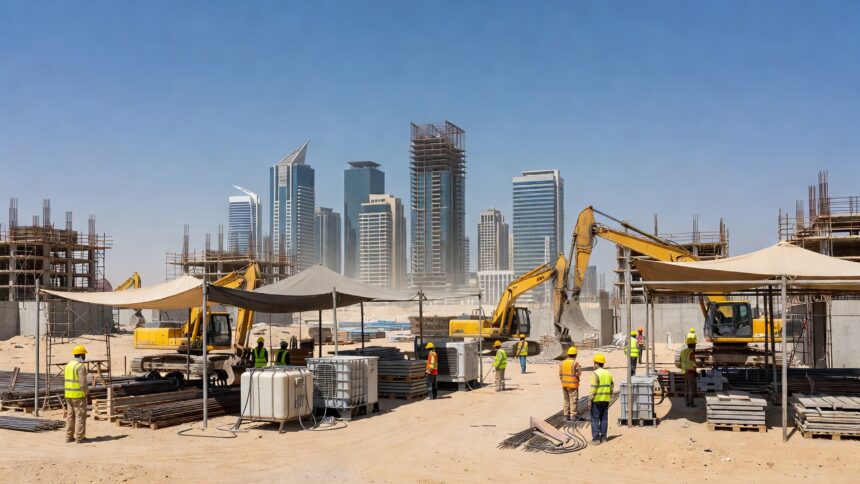
The Ministry of Human Resources and Emiratisation announced that the midday work ban, which has been in force since June 15, will end on September 15 after shielding outdoor workers from intense summer heat for three months while marking the 22nd consecutive year of the initiative. The policy prohibited work under direct sunlight and in open areas between 12:30 p.m. and 3 p.m. each day, according to the ministry, as part of its occupational health and safety framework aimed at reducing risks of heat exhaustion and related illnesses. Compliance with the measure exceeded 99 percent in previous years, the authority reported, highlighting effective partnerships with the private sector that have made worker protection an established priority across the labour market.
According to the ministry, the policy has operated as a main pillar in maintaining health and safety standards during the hottest months, when daytime temperatures frequently surpass 45 degrees Celsius. Employers were required to supply shaded rest areas, cooling equipment, drinking water, hydration supplements and first-aid facilities at work sites throughout the ban period. The ministry also arranged for thousands of air-conditioned rest stations to support delivery workers, integrating these resources in coordination with government and private entities to address the demands of mobile outdoor roles.
The ministry conducted extensive inspection visits in past campaigns, with one recent year recording roughly 134,000 checks that uncovered only 51 violations, data that Gulf News compiled from official figures shows. Such outcomes reflect growing awareness among companies of their responsibilities, the ministry stated, while praising collaborative efforts that have sustained the initiative since its launch more than two decades ago. These enforcement actions have reinforced the policy as a benchmark for labour protections in the region.
Certain activities received exemptions from the restrictions when they could not be postponed for technical reasons or involved urgent public needs, the ministry’s guidelines specified. Asphalt spreading, concrete pouring and emergency repairs to water, electricity or traffic systems fell under these allowances, provided employers maintained required safety measures for involved staff. Additional exceptions covered operations needing permits from competent authorities due to their effects on public movement and essential services.
By implementing the heat stress prevention policy, the ministry has sought to avoid injuries linked to high temperatures while fostering a leading work environment model in the UAE. The authority emphasised that the approach integrates with broader occupational safety systems and has become embedded in employer practices nationwide. As the ban concludes, full daytime operations can resume for outdoor sectors, though the ministry indicated the framework will return next summer to continue prioritising worker welfare.