 ع
ع

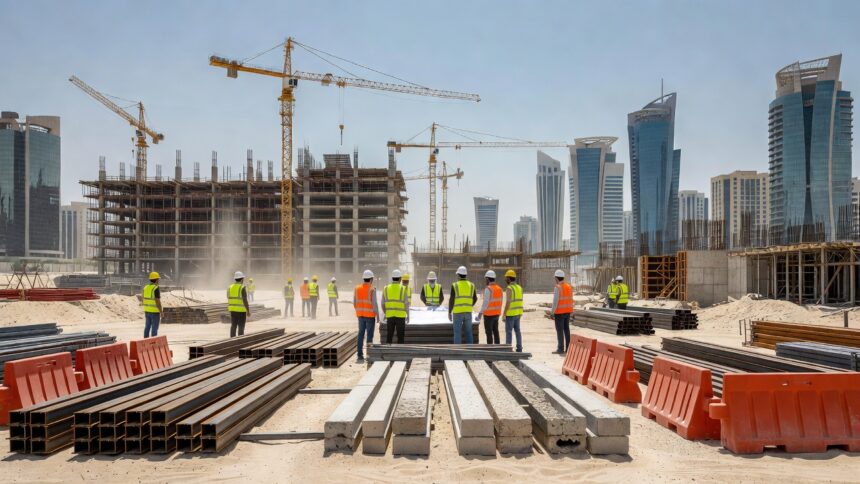
The Labour Ministry convened its second roundtable meeting with construction sector stakeholders on September 19, 2026, drawing participation from government officials, employers, worker representatives, the Building and Wood Workers’ International and the International Labour Organization. Discussions concentrated on rolling out a new framework for joint committees that aims to strengthen worker involvement and create direct communication pathways between employees and management. Participants reviewed progress on wage protection alongside occupational safety and health standards as well as social dialogue initiatives to improve cooperation at the sector level, according to a report published by The Peninsula.
Assistant Undersecretary for Migrant Labour Affairs Hamad Faraj Dalmouk described joint worker committees as an essential tool for enabling structured discussions on workplace concerns and generating practical resolutions. He noted that the committees contribute to enhanced working conditions, greater stability and higher productivity across operations. Dalmouk highlighted the Wage Protection System as a central element in safeguarding employee rights by guaranteeing timely salary disbursements and increasing transparency in contractual arrangements, the ministry’s briefing showed.
Dalmouk told attendees that advancing working conditions demands a broad strategy extending past legislation to encompass safe environments and heightened awareness of occupational safety procedures, particularly in construction where risks are elevated. The sessions addressed employment practices, recruitment processes and additional steps to reinforce collaboration between employers and workers in related industries. Undersecretary Sheikha Najwa bint Abdulrahman Al-Thani joined senior directors in guiding the exchanges, which aligned with Qatar’s broader labour market development goals.
A 2022 International Labour Organization assessment found that legislation adopted in 2019 enabled the creation of joint committees with elected migrant worker representatives, marking a first for the Gulf region. The ILO data placed the number of established committees above 70 across private companies and public bodies by October of that year, spanning construction, hospitality, manufacturing and transport. The Workplace Cooperation Unit set up by the Labour Ministry has delivered training modules on committee responsibilities, participation rights, grievance handling and related topics to support these bodies.
The International Labour Organization reported that Qatar’s introduction of a non-discriminatory minimum wage in March 2021 lifted pay for roughly 280,000 workers, or 13 percent of the workforce, to the new baseline of 1,000 QAR monthly plus food and accommodation allowances. Subsequent safety campaigns, including a 2025 initiative by the Occupational Safety and Health Department targeting Emaar construction sites, have emphasised hazard recognition, injury prevention and correct use of personal protective equipment. These programmes form part of ongoing alignment with the Qatar National Vision 2030 and associated sustainable development objectives, according to ministry statements.
Roundtable working groups examined national labour laws in tandem with international standards to identify innovative approaches for a fairer and more sustainable construction environment. The Labour Ministry has pursued memoranda of understanding with global unions covering transport and construction worker protections, building on earlier technical cooperation with the ILO. Officials stressed that sustained engagement among all parties will help maintain momentum in elevating standards while supporting the sector’s role in delivering major infrastructure projects.