
 ع
ع

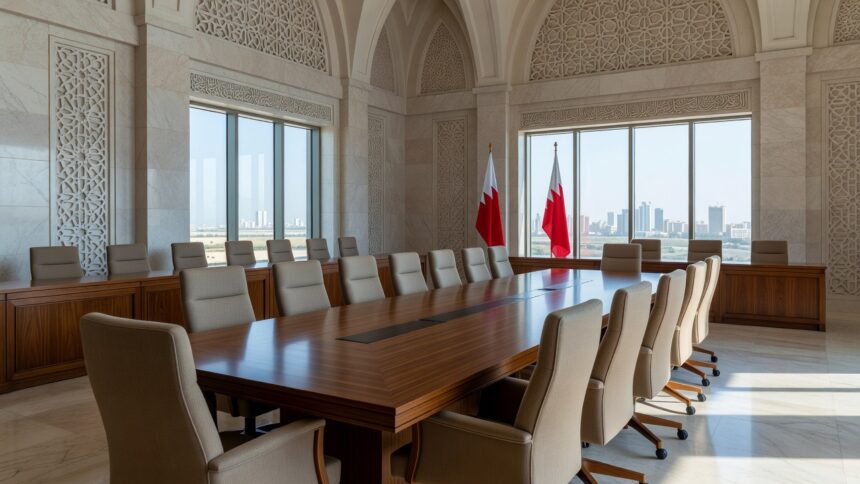
The Legislative and Legal Affairs Committee of Bahrain’s Shura Council reviewed amendments to the internal regulations of the House of Representatives that members of parliament had submitted to modernise procedures, according to a report by Alayam News on April 22, 2026. These changes, examined under Bahrain Decision No. 54 of 2002, targeted procedural reforms designed to strengthen both legislative efficiency and oversight functions within the elected chamber. The committee’s deliberations incorporated comparative analyses of equivalent regulations across GCC and Arab parliaments while gathering input from multiple stakeholders to inform its recommendations. Such reviews form a standard part of the Shura Council’s role in scrutinising legislative proposals before they proceed further.
Alayam News reported that the committee focused on enhancing parliamentary operations through the suggested updates, which build on the original decree that has governed the Council of Representatives since its issuance. The Legislation and Legal Opinion Commission lists Legislative Decree No. 54 of 2002 as having been published in Official Gazette No. 2554 on October 30, 2002, establishing core rules for sessions, debates and committee work. Subsequent proposals have sought to adapt these rules to contemporary requirements, reflecting periodic adjustments in Bahrain’s bicameral system that pairs the appointed Shura Council with the elected lower house.
A guide to Bahrain’s legal system published by New York University Globalex notes that each chamber maintains its own internal regulations to organise discussions, voting and oversight activities while imposing penalties for member absences or violations. The Shura Council’s committees, including the Legislative and Legal Affairs panel, routinely conduct in-depth examinations of referred materials with participation from relevant authorities. This particular assessment drew contributions from the Ministry of Justice, the Central Bank of Bahrain and the Bahrain Chamber for Dispute Resolution to ensure alignment with broader governance standards.
The 2026 review occurred against a backdrop of earlier modifications, as a BTI Transformation Index country report on Bahrain observed that a 2022 decree had amended parliamentary bylaws to retract certain initiative powers from Council of Representatives members and reduce allocated debate times. Those adjustments underscored ongoing efforts to calibrate authority and procedural flow within the legislature. Comparative studies of GCC parliamentary frameworks, which the committee consulted, frequently highlight shared emphases on efficiency and oversight that appear in similar reform initiatives across the region.
Bahrain’s parliamentary division has participated in GCC legislative coordination meetings that promote harmonised practices among member states, according to an official statement from the Council of Representatives website. Such collaboration supports the type of cross-jurisdictional analysis the Shura Council committee applied during its April 2026 session. The committee has handled multiple draft laws in recent terms, completing reviews of eight significant proposals in one session alone while convening 14 dedicated meetings that involved specialists from pertinent agencies.
Following the committee’s examination, HM King Hamad ratified Law 20 of 2026 amending provisions of the 2002 decree, Gulf Digital News reported in May 2026 after approvals from both the Shura and Representatives Councils. This outcome illustrates the typical progression from committee review to final enactment in Bahrain’s legislative process. The amendments ultimately aim to refine internal mechanisms without altering the foundational constitutional balance between the two chambers.