

 ع
ع


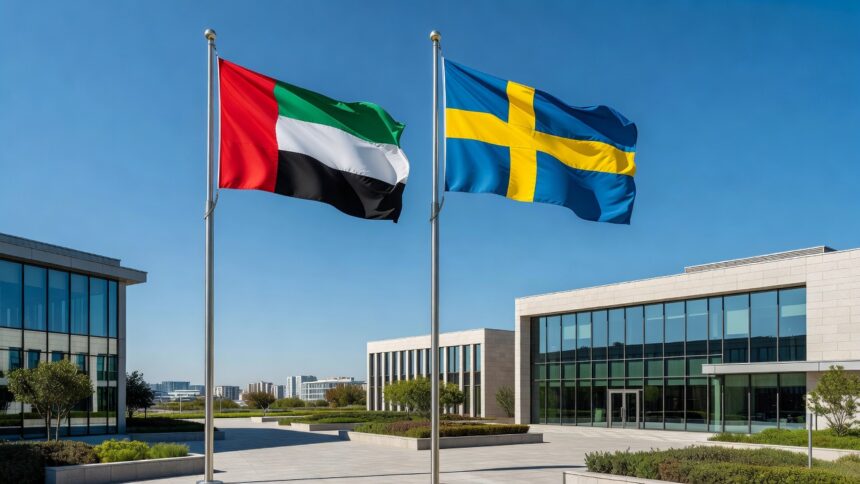
The UAE Ministry of Interior detailed a joint operation with Swedish police that resulted in the arrest of a Swedish national identified as the leader of an international money laundering gang in the UAE after he fled his home country under an Interpol red notice. At the same time Swedish authorities detained six other suspected members of the network, with legal proceedings initiated against all seven individuals. The ministry emphasized that the coordinated action followed extensive intelligence sharing, surveillance and investigative work between the two countries. No names of those arrested have been released by UAE officials.
According to the UAE Ministry of Interior, the criminal network handled approximately 70 million Swedish kronor, equivalent to $7.1 million, during a 10-month period by dealing in cash proceeds from illicit activities and redirecting them toward other criminal entities. The group relied on cryptocurrency transactions to transfer and conceal the value of those funds across borders. Investigations drew on both traditional policing methods and digital forensics to map the full scope of the operation. The ministry noted that the network maintained active connections throughout Europe.
The UAE Ministry of Interior stated that the tracing of cryptocurrency transactions and analysis of digital evidence also helped uncover financial links to other criminal activities, including organized crime and contract killings. Officials indicated that the probe exposed how the group facilitated payments that funded violent offenses, including instances where criminal networks outsourced killings. This dimension of the case emerged directly from examination of the digital wallets and transaction histories. The findings have prompted further cross-border inquiries.
Brigadier Abdulaziz Al Ahmad, director general of the Federal Criminal Police at the UAE Ministry of Interior, described the arrests as evidence of the value derived from bilateral security cooperation and the exchange of expertise in tracking financial flows. The brigadier added that such partnerships enable authorities to pursue transnational criminal organizations more effectively. His assessment, included in the ministry’s announcement, highlighted ongoing commitment to monitoring networks that seek to exploit UAE territory. Swedish police also acknowledged the role of UAE collaboration in achieving the outcome.
A Chainalysis assessment placed the volume of illicit cryptocurrency laundering above $82 billion globally in 2025, with specialized networks expanding their use of digital assets to process and obscure criminal gains. The blockchain intelligence firm has tracked how certain language-linked groups have grown to operate hundreds of active wallets dedicated to such services in recent years. The UAE-Sweden case illustrates how individual operations fit into this larger pattern of crypto-enabled crime that spans multiple jurisdictions. Law enforcement agencies have increasingly turned to on-chain analysis to disrupt these flows.
The UAE Ministry of Interior confirmed that the operation combined direct security coordination with judicial cooperation frameworks between the two nations to ensure seamless evidence sharing and simultaneous enforcement action. Swedish Police Authority international division head Anders Wiberg, cited in reporting on the ministry announcement, characterized the UAE partnership as a decisive element in the success of the case. The ministry indicated that the leader remains in custody in the UAE pending further legal steps. Additional details on related financial trails continue to surface through the joint investigation.