
 ع
ع


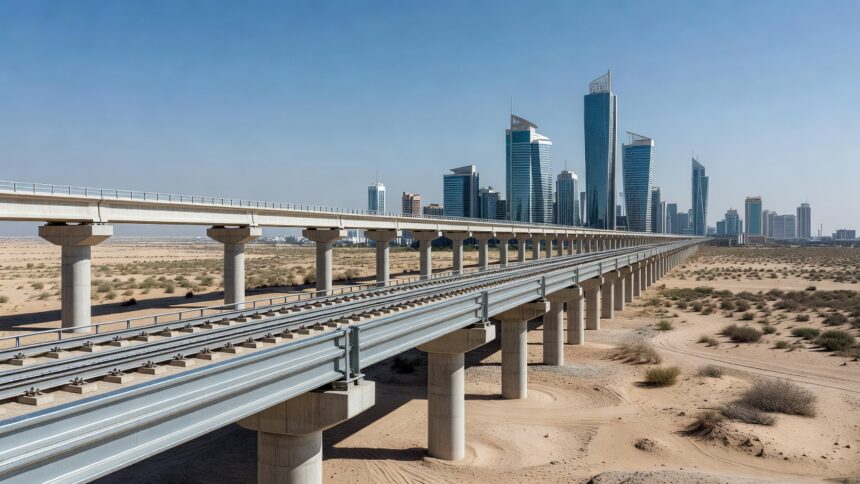
Public-private partnerships have gathered pace across the Middle East and North Africa as governments turn to private capital to fund ambitious infrastructure programs, according to a Gulf Daily News assessment of regional trends. The publication highlighted how Gulf Cooperation Council members are setting the pace, building on established PPP frameworks that have matured over three decades. Saudi Arabia alone accounted for the bulk of a $2.5 trillion GCC private-sector infrastructure opportunity identified prior to recent regional conflicts, MEED data shows. Awards in the kingdom reached approximately $20 billion in both 2023 and 2024, more than doubling earlier annual totals.
The UAE has posted the Mena region’s strongest project momentum, with its Construction Projects Momentum Index climbing to 1.52 in June 2026 from 1.16 the previous month, GlobalData figures indicate. Infrastructure activity led gains as execution-stage scores rose sharply while pre-execution planning held steady in several emirates. Abu Dhabi has closed multiple PPP transactions including the Zayed City Schools project, a road-lighting initiative and student accommodation at Khalifa University between 2022 and 2024. A federal PPP law enacted in 2022 underpins further expansion alongside emirate-level regulations already in force in Abu Dhabi and Dubai.
Regional developers have stepped into the space left by some international sponsors that tightened their criteria after recent conflicts altered risk calculations, a Watson Farley & Williams infrastructure review found. This shift has supported continued deal flow even as global sponsors grew more selective. Oman, Qatar and Bahrain have also advanced PPP pipelines tied to their respective long-term visions, extending the Gulf’s influence beyond the largest two economies. The Bahrain metro scheme stands among recent notable procurements that illustrate broader sectoral reach.
Saudi Arabia’s National Centre for Privatisation continues to anchor the kingdom’s $190 billion PPP push under Vision 2030, MEED reported in its coverage of the sector’s new momentum. The centre has widened tender activity into transport, health and education, moving away from an earlier concentration on power and water. A phased approach to the 1,500-kilometre Saudi Land Bridge rail project has replaced an initial single-contract PPP model, allowing multiple design-and-build packages that could draw fresh private participation. Spanish firm Sener secured the design contract in 2026 following earlier preparatory work by Italian consultants.
Analysts expect the Mena pipeline to sustain its recovery provided governments maintain transparent tender processes and bankable project structures. GlobalData’s three-month moving average for the region’s momentum index held at 0.95 through mid-2026 despite uneven performance in individual markets. Egypt, Algeria and Kuwait recorded notable upticks while Saudi Arabia’s index dipped temporarily on procurement adjustments for renewable schemes. Industry participants anticipate that successful financial closes will encourage further private capital inflows across the bloc.
Gulf Daily News noted that the current wave of PPP activity reflects a structural evolution rather than a short-term response to fiscal gaps. Established legal frameworks, dedicated privatisation units and demonstrated transaction history have improved investor confidence even amid external uncertainties. The publication pointed to Abu Dhabi’s consistent delivery of social-infrastructure PPPs as evidence that the model can extend beyond utilities into sectors once considered purely governmental. Further standardisation of contracts and risk allocation is expected to broaden participation from both regional and selective international players.