
 ع
ع


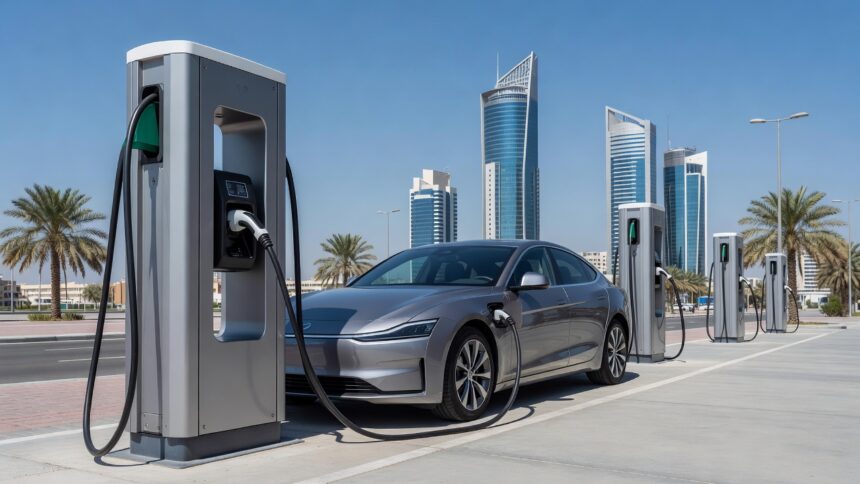
The News of Bahrain report published Friday pointed to the limited presence of electric vehicles across the kingdom. With approximately 747,400 vehicles registered according to World Population Review data from 2023, the ratio implies fewer than 750 electric cars in circulation. The assessment arrives as authorities advance multiple initiatives to promote sustainable transport under the country’s long-term development plans.
Bahrain’s Electricity and Water Authority signed an agreement in 2023 to install five high-speed charging stations with a combined capacity of 360 kW. Subsequent collaboration between Kanoo Power Solutions and ABB aimed to widen the charging network throughout the country. Market assessments indicate ambitions to establish more than 300 stations supported by roughly 60 million dollars in funding tied to Vision 2030.
Adoption levels trail those seen elsewhere in the Gulf. Across the GCC, EV sales penetration doubled from around 2 percent to 4 percent in 2024, regional evaluations show. The UAE recorded more than 28,000 battery electric vehicles in Dubai and Abu Dhabi by late 2023 while Saudi Arabia reached approximately 23,000 in the same timeframe. Bahrain’s current ratio remains markedly lower than these benchmarks.
A 2022 discussion paper issued by the Bahrain Research Group examined possible impacts of wider EV uptake on energy use and emissions. The analysis, drawing on General Directorate of Traffic statistics that listed 757,000 vehicles in 2020, forecast that electric vehicles could comprise 37 percent of the fleet by 2050 under a rapid adoption scenario that included an internal combustion engine sales ban from 2040. Researchers noted that meaningful uptake only began after the first charging station opened in 2021.
Sector observers have detected fresh momentum entering 2026. An AutoVoB analysis published earlier this year projected annual growth exceeding 30 percent through 2031, fueled by the introduction of models from BYD, Tesla and ZEEKR. Tesla Model 3 registrations had already surpassed 1,000 units by the end of 2025, the report added.
The kingdom put in place its first comprehensive regulatory framework for EV charging infrastructure in November 2025. That framework sets standards for installation, safety and grid integration applicable to both private and commercial deployments. Home charger installations climbed 64 percent year-on-year in affluent residential districts during 2024, according to sector guides.