
 ع
ع


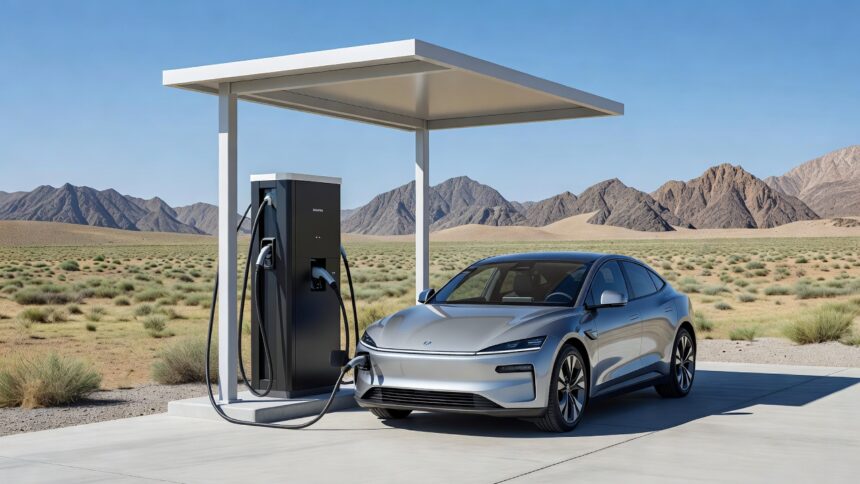
The Ministry of Transport, Communications and Information Technology set the charging fee at 50 baisa per kilowatt-hour for units with a capacity of up to 90 kilowatts. Chargers rated between 91 and 180 kilowatts will carry a rate of 90 baisa per kilowatt-hour while those at 181 kilowatts or higher will be priced at 120 baisa per kilowatt-hour. The ministry issued the tariffs in coordination with the Public Services Regulatory Authority and the Oman Net Zero Centre as part of efforts to formalise the emerging market.
The new fee schedule follows a detailed economic and operational study that examined capital investment, operating expenses, station utilisation and typical payback periods for charging infrastructure, the ministry said. Officials framed the tariffs as a means to deliver price transparency to drivers while preserving investment incentives for operators expanding the network. The Public Services Regulatory Authority contributed regulatory oversight to the process while the Oman Net Zero Centre aligned the rates with national sustainability targets.
Results of the ministry study showed that electric vehicle charging under the new structure at service stations would still cost less than fuelling equivalent petrol vehicles. This comparison is expected to support broader consumer uptake of electric vehicles across Oman. The announcement arrives as the sultanate advances its net-zero roadmap and promotes sustainable transport options.
Ministry of Transport, Communications and Information Technology data placed the number of registered electric vehicles in the first half of 2026 at more than 5,900. The national charging network stood at over 160 points with an expansion target of 350 by the end of 2027, according to the same ministry figures. These developments reflect accelerating public and private investment in electric mobility infrastructure.
Shell Oman Marketing and the First Electric Vehicle Company currently operate public charging points, the ministry statement noted. Multiple additional operators have entered planning phases that include technical assessments, grid connection approvals and site feasibility reviews. Recent partnerships with international manufacturers have focused on deployment of higher-capacity fast-charging equipment.
The Public Services Regulatory Authority has emphasised the importance of standardised tariffs to prevent market fragmentation while encouraging new entrants. Its collaboration with the transport ministry ensures consistent application of the fees across all charging providers. The Oman Net Zero Centre has integrated the tariff decision into wider decarbonisation planning for the transport sector.
Oman has also begun embedding charging facilities in tourism locations and urban developments, a move supported by the Ministry of Heritage and Tourism. Agreements unveiled at the Gulf Green Mobility Forum outlined proposals for ultra-fast hubs with capacities reaching 720 kilowatts together with solar integration options. Such initiatives form part of a coordinated push to scale electric vehicle adoption and associated support services.