
 ع
ع

The Hindu reported that India forged the BRICS consensus after overnight negotiations and direct talks involving Prime Minister Narendra Modi with the leaders of Iran, Russia and the United Arab Emirates. The resulting New Delhi Declaration called for maximum restraint in the West Asia war while avoiding direct references to attacks against Iran by the United States and Israel or subsequent Iranian strikes on its Persian Gulf neighbours including the UAE. It made no separate mention of the Russian war in Ukraine. Previous ministerial meetings of the grouping this year had failed to issue joint statements on the Iran-UAE differences, according to officials cited by the newspaper.
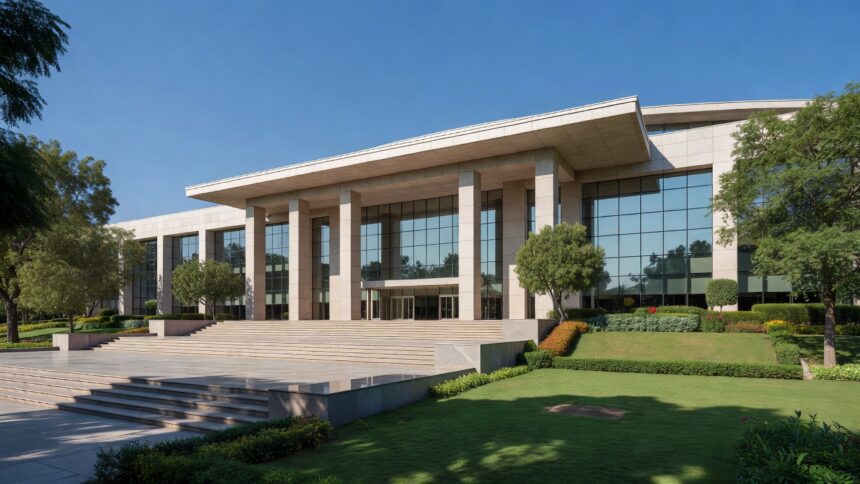
A rare diplomatic breakthrough occurred when Iranian President Masoud Pezeshkian met with Abu Dhabi Crown Prince Khaled bin Mohamed Al Nahyan on the sidelines of the summit at Delhi’s Bharat Mandapam venue, India Today stated. The meeting formed part of efforts to ease tensions that had complicated earlier BRICS discussions on regional conflicts. Pezeshkian and the crown prince discussed the need for de-escalation in West Asia as part of the broader consensus-building process. The declaration prioritised conflict prevention, peaceful dispute resolution, multilateralism and adherence to international law, according to the India Today report.
The New Delhi Declaration called for comprehensive reform of the United Nations including support for Brazil and India to secure permanent seats on the Security Council, CNBC TV18 reported. China and Russia as permanent members of the council reiterated their backing for the aspirations of Brazil and India to play a greater role in the United Nations. The document also backed resilient critical mineral supply chains, faster cross-border payments and greater cooperation on global security while calling for dialogue on regional conflicts. China announced it would assume the BRICS presidency for the coming year following the summit, according to multiple accounts.
BRICS strongly condemned the terrorist attack in Jammu and Kashmir’s Pahalgam on April 22, 2025, that killed 26 people and injured several others, the declaration stated. The grouping opposed double standards in counter-terrorism efforts and called for Israeli forces to withdraw from Lebanese territories while urging restraint across West Asia. It raised concerns over unilateral tariff barriers that violate World Trade Organization rules and highlighted the risk of nuclear confrontation. The 140-point document advocated for cross-border trade settlements in local BRICS currencies, CNBC TV18 figures show.
Under India’s chairship the grouping agreed to establish a BRICS Task Force on Growth and Development as a platform to tackle shared challenges for member states and other emerging economies, according to the declaration text. The document stressed the need for greater participation of the Global South in developing future technologies and in shaping global governance rules. It emphasised cooperation on trade, investment, taxation and multilateral reform. The adoption marks the conclusion of the 18th BRICS Summit that brought together 11 countries including the original members plus Egypt, Ethiopia, Indonesia, Iran, Saudi Arabia and the UAE.
Prime Minister Narendra Modi announced the adoption by stating that no member nation had objected to the text. “Since no member nation has objected to this, New Delhi Declaration 2026 is adopted hereby,” Modi said. He added that the document “gives clear direction to our shared goals” and appreciated the constructive spirit shown by all participants. The Hindu noted that the consensus demonstrated the grouping’s ability to navigate geopolitical differences two decades after its formation.