
 ع
ع


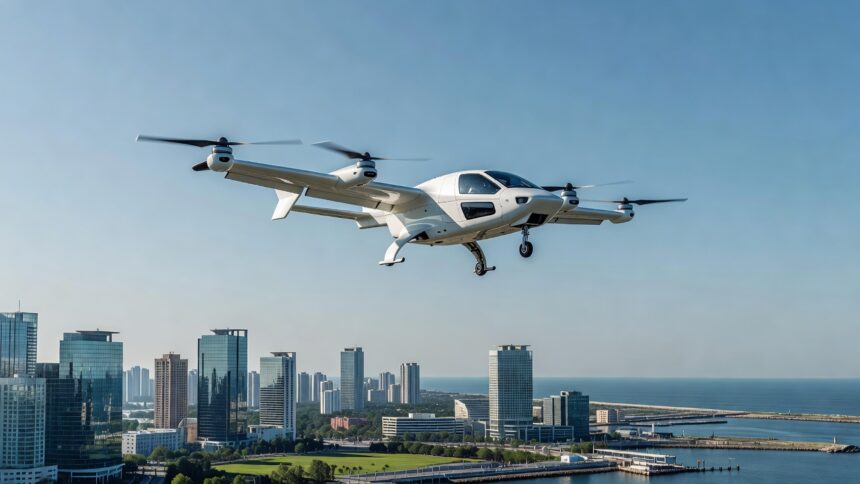
The companies’ joint announcement described how the deal merges complementary capabilities developed over decades in autonomous flight, electric vertical takeoff and landing aircraft, and unmanned aircraft systems to establish what they termed a groundbreaking end-to-end physical AI platform for aerospace and defense. Wisk, SkyGrid and Insitu contribute nearly two million combined flight hours that will deepen the foundation for Archer’s ZEE artificial intelligence system. The arrangement also features technology-sharing provisions allowing Boeing to maintain access to core autonomous flight technology for its current and future commercial and defense aircraft programs while focusing investments on its primary businesses.
According to the announcement, Wisk Aero stands as the only company to have designed, built and flown six generations of eVTOL aircraft while completing more than 1,700 flight tests across 16 years of work on advanced autonomy systems. SkyGrid has developed a leading ground-based, aircraft-agnostic air traffic management solution that provides the digital infrastructure needed for safe integration and scalable automation of future airspace. Insitu has pioneered the design, development and manufacturing of uncrewed aircraft systems for intelligence, surveillance and reconnaissance, with more than 3,500 units fielded and operations supporting armed forces in 35 nations across every hemisphere.
Archer Founder and CEO Adam Goldstein said, “This is a watershed moment for Archer and the future of physical AI in aerospace and defense. This is the next big step forward in becoming a diversified platform, rapidly growing our revenue base and bringing scale to our business.” Boeing Vice President of Commercial Airplanes Product Development Brian Yutko added that the transaction constitutes a win-win for both parties because it accelerates development timelines for the acquired units while letting Boeing capitalize on prior investments through its core operations. Yutko noted that collaboration with Archer will drive further innovation across aerospace, defense and autonomy based on his direct experience with the teams involved.
The transaction is subject to regulatory clearances including expiration or termination of the waiting period under the Hart-Scott-Rodino Antitrust Improvements Act and is expected to close by the end of 2026, the companies reported. Archer retained Moelis & Company as financial advisor and Fenwick & West as outside counsel while Boeing worked with J.P. Morgan Securities and Mayer Brown. Baker McKenzie advised Archer Aviation on the international aspects of the complex cross-border carve-out that spans the United States, Australia and the United Arab Emirates, the law firm stated in a subsequent release.
This step takes place against rapid projected growth in the eVTOL sector. Precedence Research data places the global eVTOL aircraft market at 5.13 billion U.S. dollars in 2026 with an increase to 216.02 billion dollars by 2035 at a compound annual growth rate of 51.87 percent. The combined capabilities are expected to address both commercial air mobility demand and defense applications through enhanced autonomy and airspace management solutions.
The announcement highlighted that the subsidiaries’ technologies will enable new solutions across commercial aerospace, defense and air traffic management sectors. Insitu’s established global support networks and manufacturing experience add immediate operational depth to Archer’s platform, according to the companies. Archer expressed confidence that the acquisition will support its evolution into a diversified business with expanded revenue streams and greater scale.