ع



The EnterpriseAM analysis published this week framed the UAE’s decade of investment in Egypt as turning into a Hormuz hedge as the war shrinks Dubai’s economy, highlighting how longstanding capital commitments have gained fresh relevance amid regional conflict. According to the International Monetary Fund, the disruption to the Strait of Hormuz represents the largest oil shock in five to six decades, with the wider GCC economy set to contract 4.8 percent in 2026 before rebounding in 2027. The assessment found that the UAE and Saudi Arabia have withstood the shock better than peers thanks to alternative export routes and financial buffers, yet Dubai has faced particular pressure from reduced trade volumes and tourism slowdowns. Central Agency for Public Mobilization and Statistics data places UAE investments in Egypt at $38.9 billion in fiscal year 2023-24, the bulk of $41.5 billion in total Arab inflows that year.
Those figures, which include the landmark $35 billion Ras al-Hekma development agreement with Abu Dhabi’s ADQ, built upon more than $30 billion in prior UAE commitments, according to earlier CAPMAS and central bank statistics. The projects encompass real estate, renewable energy, ports and industrial infrastructure, offering diversification away from direct exposure to Gulf shipping chokepoints. An IMF review released in September noted that Egypt absorbed the war shock better than expected through flexible exchange rates and policy measures, with net international reserves actually increasing despite initial portfolio outflows.
The EnterpriseAM report detailed how the investments now function as an economic outlet for UAE entities seeking stability beyond the immediate Hormuz risks, with Egyptian sites providing access to Mediterranean logistics and a large domestic market. IMF data shows non-resident holdings of Egyptian local-currency debt fell sharply in the war’s early months but later recovered, while remittances from Egyptians in the UAE reached $3.6 billion in the latest fiscal year. This cross-border economic tie has remained resilient even as Dubai hotel occupancy dipped and re-export activity slowed in the first half of 2026.
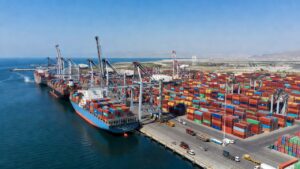
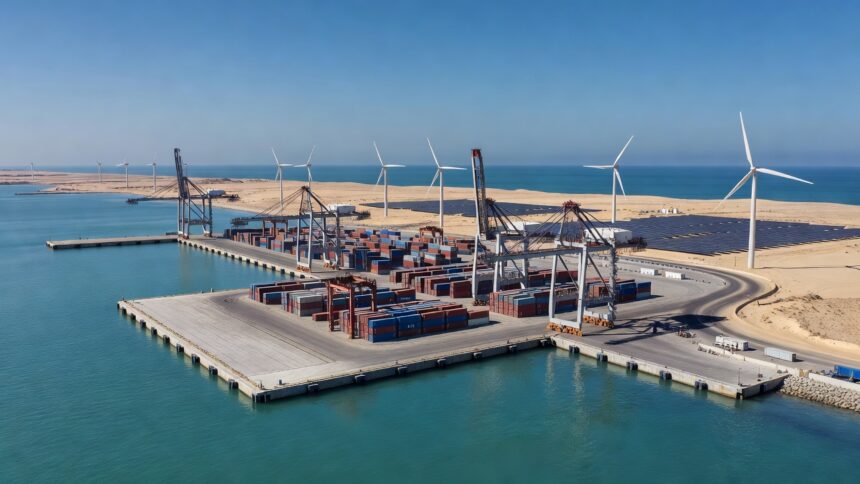
Separate agreements include a planned $3 billion oil logistics zone at Egypt’s Al Hamra Port, modeled on Fujairah’s facilities, alongside talks for an Emirati industrial zone in East Port Said to boost local production and exports. The Central Agency for Public Mobilization and Statistics reported that UAE imports from Egypt hit a record $7 billion last year, reflecting deepening commercial links. Such projects align with the UAE’s broader Zero Hormuz strategy, which has accelerated east-coast port development at Fujairah and Khor Fakkan to bypass the strait.
The International Monetary Fund expects the UAE economy to shrink 3.9 percent in 2026, with non-oil sectors in Dubai particularly affected by rerouted shipping and heightened insurance costs for vessels. ADNOC has fast-tracked a new pipeline to double export capacity via Fujairah by 2027, a move that complements rather than replaces the Egyptian investment portfolio. EnterpriseAM noted that the combined approach of immediate infrastructure bypasses and longer-term diversification into Egypt has helped maintain investor confidence despite the conflict that began on February 28.
Egypt’s central bank and CAPMAS statistics show the UAE remains the dominant Arab investor, far outpacing Saudi and Qatari flows even after the initial surge from the Ras al-Hekma deal. The IMF has highlighted that continued Gulf support for Egypt, including from the UAE, has not declined despite fiscal strains across the region. These ties underscore a decade-long partnership that now extends strategic depth for the UAE at a time when Dubai’s traditional trade hubs face sustained pressure from the Hormuz crisis.