
 ع
ع


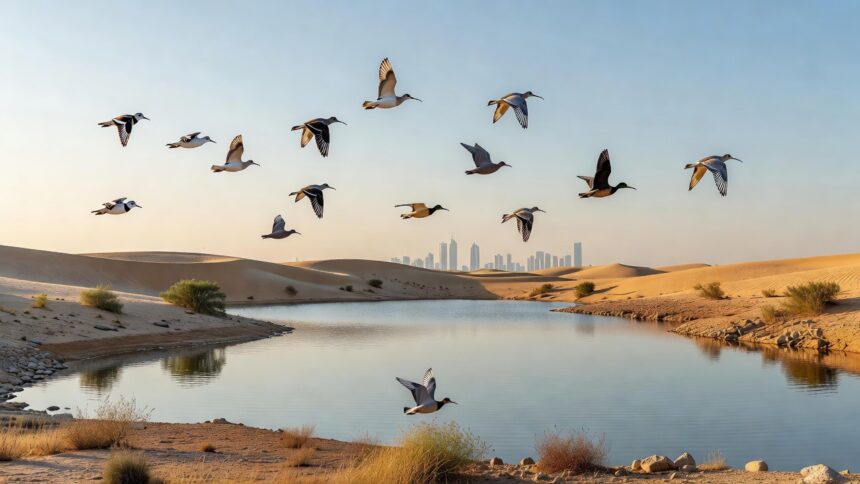
The Ministry of Environment and Climate Change issued Ministerial Decision No 26 of 2025 to regulate the hunting of migratory birds known locally as Al-Lofu. The decision establishes the season from September 1 to February 15 each year for the next two years. It forms part of broader efforts to balance traditional hunting practices with environmental protection according to the ministry.
According to the ministerial decision a specific list of 10 bird species may be pursued during the designated period. These include the Houbara bustard curlew mallard duck blue rock thrush singing thrush hoopoe collared dove sand plover desert plover and European plover. The decision explicitly prohibits hunting of any other wild animals birds or reptiles throughout the year.
The resolution restricts Houbara bustard hunting to the use of falcons exclusively the ministry said. It bans non-traditional tools such as electronic devices that imitate bird calls citing potential negative impacts on wildlife. Hunting is limited to daylight hours between sunrise and sunset with additional rules against disturbing nests or harming wild plants.
Designated no-hunting zones cover natural reserves islands artificial lakes urban areas public parks and locations within 500 metres of public roads the decision stated. Private properties and farms also remain off-limits without owner permission. The ministry further prohibited the sale trade or circulation of any hunted birds.
A BirdLife International assessment found that an estimated 13,500 birds may be killed or taken illegally each year in Qatar. The figure forms part of a wider regional total of between 1.7 million and 4.6 million birds across the Arabian peninsula Iran and Iraq. Such data underscores the importance of regulated seasons in maintaining sustainable populations.
Falcon traders at Souq Waqif reported a 60 percent increase in sales ahead of the season opening according to a Gulf Times report. The surge reflects heightened preparations by Qatari enthusiasts and visitors from neighbouring Gulf countries. Additional falcon shipments from countries including Iran Pakistan and Syria are expected to arrive in the coming weeks.
The ministry urged all hunters to adhere strictly to the conditions outlined in the resolution to avoid penalties under national environmental laws. Violations fall under the provisions of Law No 4 of 2002 which governs wildlife protection. Officials emphasised that compliance supports the preservation of biodiversity and ecological balance across the country.