
 ع
ع


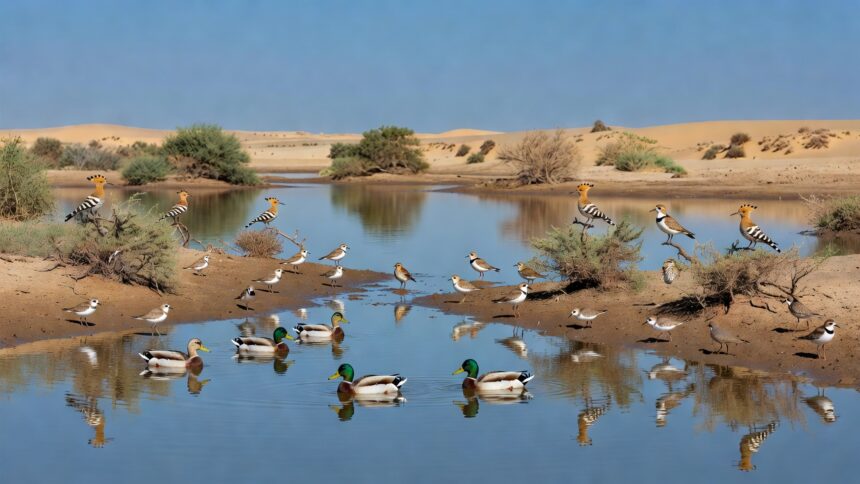
The Ministry of Environment and Climate Change announced the opening of the migratory bird hunting season across the country on September 1. The season extends until February 15, 2027, under Ministerial Decision No. 7 of 2026, which the ministry said aims to balance traditional hunting with protection of biodiversity and natural resources. The ministry called on all hunters to comply fully with the listed species, allowed methods and prohibited activities to avoid penalties and support ecological sustainability.
The ministerial decision permits hunting of 10 specific migratory species during the designated period. These include the houbara bustard, which may only be pursued with falcons, as well as the common curlew, mallard duck, blue rock thrush and singing thrush. Additional allowable birds are the hoopoe, collared dove, sand plover, desert plover and European plover, according to the text of the decision.
The ministry stressed that hunting any other wild animals, birds or reptiles remains strictly forbidden throughout the year. All hunting must take place between sunrise and sunset, with an absolute ban on electronic calling devices that mimic bird sounds because such tools can disturb natural behaviour and breeding patterns. The decision also prohibits the sale, trade or circulation of any hunted birds, the ministry stated.
Certain areas are entirely off limits under the regulations outlined in the ministerial decision. These include nature reserves, islands, artificial lakes, cities, villages, public parks and any location within 500 metres of public roads. Private farms and properties may not be used for hunting without the explicit permission of the landowner or rights holder, the ministry added.
Hunters must refrain from disturbing nests, eggs or wild plants in the course of their activities, the ministry’s statement emphasised. The two-year validity of the decision provides continuity for enforcement while allowing periodic review of its impact on wildlife populations. Officials noted that full familiarity with the rules is essential before any hunting expedition begins.
Anticipation for the season has already boosted related economic activity in traditional markets. Gulf Times reported that falcon traders at Souq Waqif have seen sales rise by an estimated 60 percent as enthusiasts from Qatar and neighbouring Gulf states prepare for hunts. Additional shipments of birds of prey from countries including Iran, Pakistan and Syria are expected in the coming weeks to meet sustained demand through the peak months.