ع



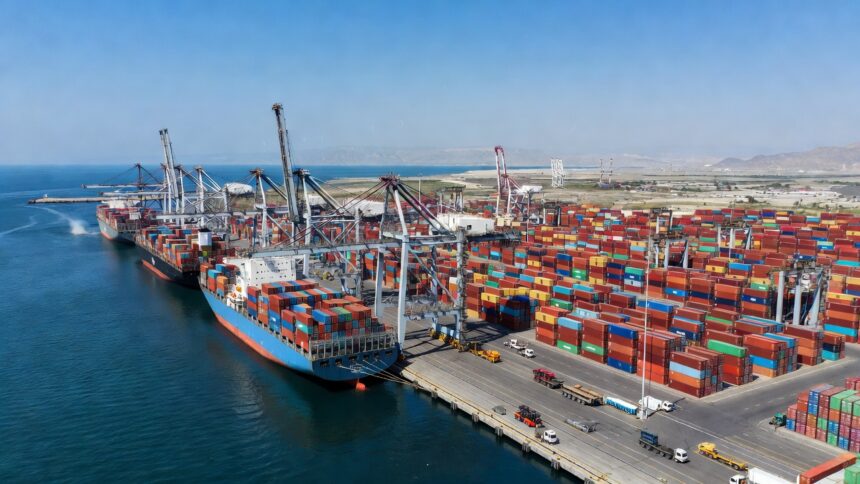
Gulftainer has accelerated expansion at Khorfakkan Port in response to a surge in cargo volumes caused by the regional conflict that has disrupted shipping through the Strait of Hormuz, according to group chief executive Farid Belbouab. The executive told Khaleej Times that the port’s weekly container handling has increased from 8,000 TEUs before the crisis to 65,000 at present. This shift has allowed the facility to meet 80 to 90 per cent of the UAE’s continental supply chain demands during the disruption, Belbouab added.
The company is advancing a $2 billion investment to lift the port’s capacity from 3.5 million TEUs a year to 5 million in the near term through additional cranes and equipment, a Gulftainer statement indicated. A new berth is under development as part of the immediate upgrades. The three-year masterplan targets more than 10 million TEUs annually, extending the port’s reach beyond the GCC to East Africa, the wider Middle East and the Indian Ocean.
Khorfakkan’s strategic position on the Gulf of Oman outside the Strait of Hormuz has made it a key alternative gateway as shipping lines seek to avoid risks associated with the conflict, the AGBI reported. Before the Iran conflict the strait typically handled about 130 vessel transits daily, according to maritime data. Concerns over safety have pushed companies toward east coast ports that bypass the Arabian Gulf entirely, a pattern that has seen the war redirect UAE-bound boxes to these facilities.
The Loadstar reported this month that the relaunch of the Gemini service is adding to congestion pressure at Khor Fakkan after it replaced calls at Jebel Ali due to the US-Iran war. Maersk highlighted vessel congestion, limited berth availability, high yard utilisation and road issues delaying cargo clearance in its latest operational update. The carrier is moving some boxes to an inland container depot at Sajaa to alleviate the strain while planning possible redirections to other gateways.
Sharjah Ports, Customs and Free Zones Authority outlined how the port connects with the emirate’s wider network including Khalid Port and Hamriyah Port on the west coast as well as logistics complexes in Al Sajaa and Al Dhaid. This integrated system supports smoother trade flows and strengthens supply chain resilience, the authority said in an announcement. Border crossings, road networks and trade corridors link maritime cargo with inland distribution across the region.
The expansion features 17-metre deep berths and 21 high-performance ship-to-shore cranes capable of serving the world’s largest vessels, according to port officials. Such infrastructure enhancements aim to bolster the UAE’s role in international shipping routes amid evolving geopolitical dynamics. Gulftainer’s rapid scaling of truck movements from 100 to 8,500 per day demonstrates the operator’s ability to adapt quickly to heightened demand.