ع



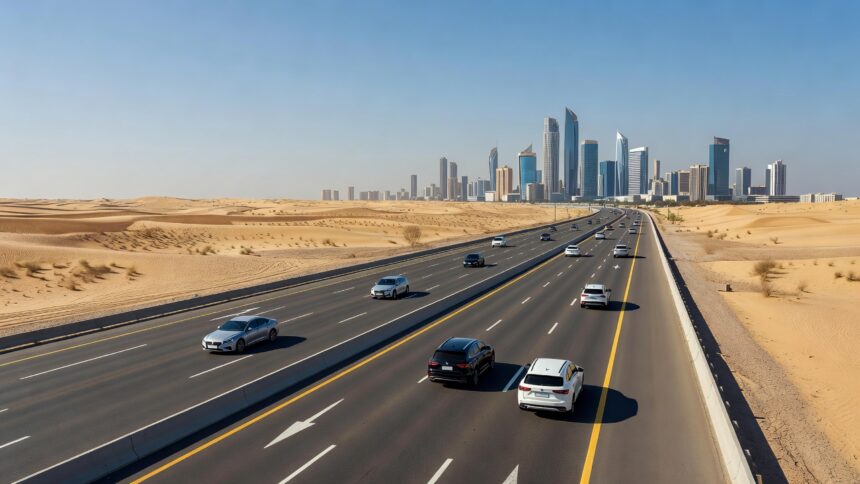
Cabinet Decision No. 174 of 2026 establishes the nine-hour driving limit in Article 7, paragraph 2, of the executive regulations attached to Federal Decree-Law No. 14 of 2024 on traffic regulation. The measure takes effect across the country on January 1, 2027, and applies to every licensed motorist rather than only professional drivers such as those operating trucks or heavy vehicles. The Federal Traffic Council holds authority to modify the ceiling if required, the decision states. Even when total driving time remains below nine hours, any motorist experiencing fatigue that impairs safe operation must immediately stop, according to the same regulatory text.
The regulation seeks to improve road safety by addressing drowsiness, which slows decision-making and reaction times in ways that elevate crash risks. Dubai Police issued a fresh warning against driving while tired only weeks before the new rules were detailed, noting that exhaustion contributes to serious incidents on emirate roads. In Dubai, motorists currently face a Dh400 fine and four black points on their licence for operating a vehicle while physically or mentally fatigued, although authorities have not yet clarified whether penalties will evolve once the hourly cap enters force.
UAE Ministry of Interior figures show 20 traffic accidents linked to driver fatigue and drowsiness in 2025, continuing a downward trend that saw 27 such crashes recorded in 2024 and 29 in 2023. The ministry’s data place the four-year total for fatigue-related collisions at 113 between 2022 and 2025, with the majority occurring in Abu Dhabi. These statistics underscore the persistent hazard that the new hourly restriction now targets on a nationwide scale.
Federal Decree-Law No. 14 of 2024 itself replaced the older 1995 traffic statute and introduced broader updates ranging from vehicle classifications for autonomous technologies to revised licensing procedures. The 2024 law took formal effect in March 2025, paving the way for the detailed executive regulations published in Cabinet Decision No. 174 of 2026. Implementation of the driving-time rule therefore forms one element of a larger modernisation effort that has already altered minimum driving ages and strengthened penalties for other violations.
Road safety specialists have long noted that fatigue impairs judgement in a manner comparable to alcohol consumption, with studies cited by Road Safety UAE indicating that 17 hours without sleep produces effects similar to a blood-alcohol concentration of 0.05. The new federal limit provides a clear, enforceable benchmark that authorities can monitor through enforcement campaigns already focused on drowsy driving. Licensing authorities in each emirate will incorporate the restriction into driver education and testing materials once the regulation activates on January 1.