ع



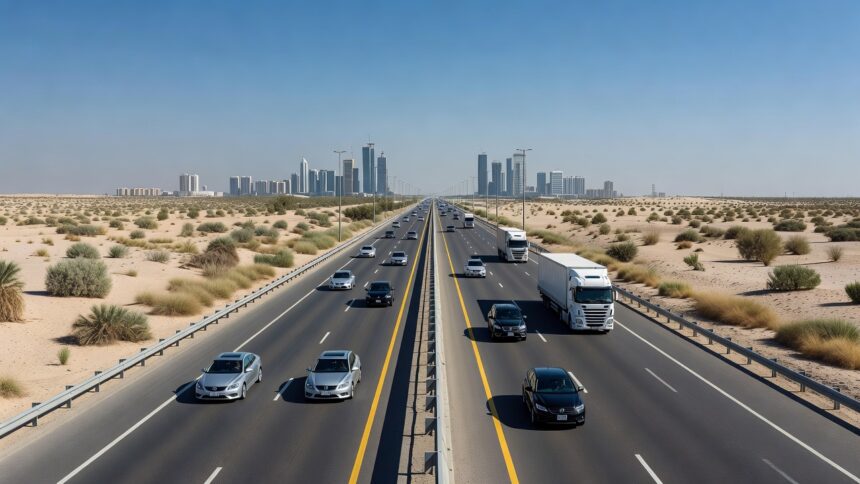
The nine-hour driving limit within a 24-hour period forms part of Article 7, paragraph 2, in Cabinet Decision No. 174 of 2026, which executes Federal Decree-Law No. 14 of 2024 on traffic regulation. Khaleej Times reported that the obligation applies generally to all vehicle drivers rather than targeting only professional operators such as truck drivers. The decision also grants the Federal Traffic Council authority to revise the driving-hours threshold when required. This framework takes effect on January 1, 2027, as authorities seek to address risks from prolonged time on the road.
The regulation maintains a separate prohibition that bars any motorist from driving when fatigue or exhaustion compromises safe operation, even if total driving time stays under nine hours. Khaleej Times noted that the dual requirements tackle both cumulative effects of extended drives and sudden tiredness that may arise unexpectedly during shorter journeys. A driver experiencing impairing fatigue must stop immediately regardless of elapsed time, according to the published text of the cabinet decision.
Ministry of Interior figures cited in the Khaleej Times report placed the number of fatigue-related traffic accidents at 20 across the UAE in 2025. The ministry’s data shows a total of 113 such incidents recorded between 2022 and 2025, with numbers declining progressively from 37 in 2022 to 29 in 2023, 27 in 2024 and the 20 recorded last year. Most of the crashes have consistently occurred in Abu Dhabi, with far fewer reported in Dubai and Ras Al Khaimah over the four-year span.
The updated rules follow a recent Dubai Police warning issued after a truck driver fell asleep at the wheel on October 29, 2026. The vehicle veered off Emirates Road (E611) toward Abu Dhabi and struck a metal safety barrier, with the driver sustaining only minor injuries that were treated at the scene. Brigadier Juma Salem bin Suwaidan, director of the General Department of Traffic at Dubai Police, stated that fatigue affects concentration, alertness and the ability to respond quickly to unexpected situations. “Tiredness can impair reaction times and decision-making, increasing the risk of losing control, drifting out of lane or colliding with roadside barriers and other vehicles,” he said.
RoadSafetyUAE has identified poor-quality sleep and lengthy periods of driving as leading causes of fatigue that diminish a driver’s capacity to judge their own tiredness accurately. The organisation’s assessment, referenced by Khaleej Times, underscores how exhaustion can lead to reduced attention even when a motorist believes they remain alert. Traffic departments have sustained awareness campaigns that encourage drivers to secure adequate rest before any trip and to pull over at the first signs of drowsiness.
Cabinet Decision No. 174 of 2026 supplies the detailed executive regulations for the federal traffic decree-law that entered into force in March 2025. The decision addresses multiple areas including personal mobility devices, vehicle registration limits and updated safety obligations for all road users. Introduction of the driving time restriction aligns with the decree-law’s establishment of a Federal Traffic Council to oversee ongoing adjustments to traffic standards nationwide.