

 ع
ع


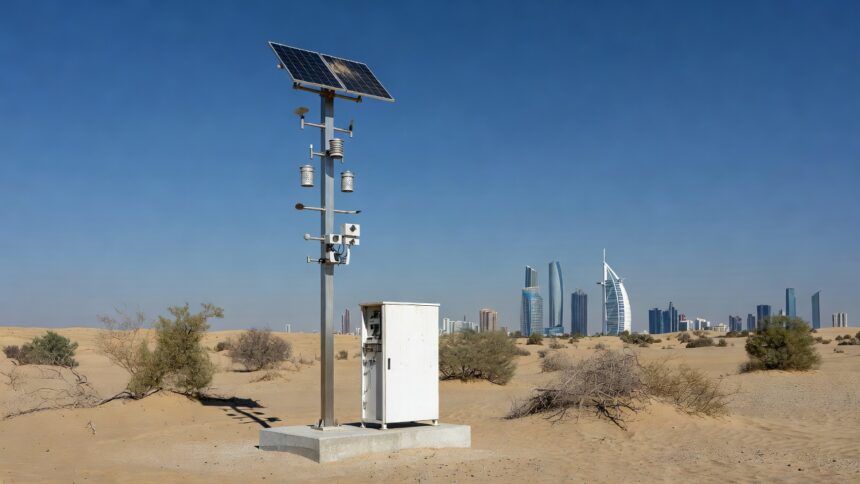
The UAE government has established the National Air Quality Agenda 2031 to serve as a framework for federal and local entities along with the private sector to monitor and manage air quality. According to the official UAE government platform, the agenda focuses on three main pillars of monitoring, mitigation and management to reduce air pollution. It addresses key areas such as outdoor air quality, indoor air quality, ambient odour and ambient noise through targeted initiatives and projects.
Real-time tracking forms a cornerstone of the new strategy with the ministry’s air quality index application providing instant updates based on satellite data analysis. The system offers forecasts for up to three days and explains health impacts associated with different pollution levels, the ministry reported. Five primary pollutants are tracked including nitrogen dioxide, carbon monoxide, ozone, sulfur dioxide and PM10 particles. This tool aims to raise community awareness about air quality issues across the country.
A national network of 56 monitoring stations supports the data collection efforts under the agenda, government figures show. The stations are distributed with the highest concentration in Abu Dhabi followed by Dubai and other emirates, according to official records. This infrastructure enables accurate measurement and informed decision-making for air quality management.
The strategy integrates an advanced integrated emission quantification tool unveiled to track greenhouse gas emissions and air pollutants simultaneously, Khaleej Times reported. The tool has streamlined the preparation of national emissions inventories, reducing the timeframe from 15 months to three months, the newspaper said. Minister of Climate Change and Environment Dr Amna bint Abdullah Al Dahak described the system as a quantum leap in environmental governance.
Additional enablers in the agenda include building technical capacities, promoting research and facilitating access to funding, the government platform indicated. The efforts align with national visions that emphasise sustainable development and improved quality of life for residents. AI-powered systems are also being deployed to enhance forecasting and provide interactive alerts to users, recent studies have found.
The overall objective is to maintain high air quality standards while supporting the UAE’s net zero by 2050 target, according to multiple official statements. Automation in the monitoring system has reduced reporting steps by 64 per cent, a ministry assessment found. Stakeholders continue to collaborate on evolving the platform to maintain the country’s leadership in climate innovation.