 ع
ع

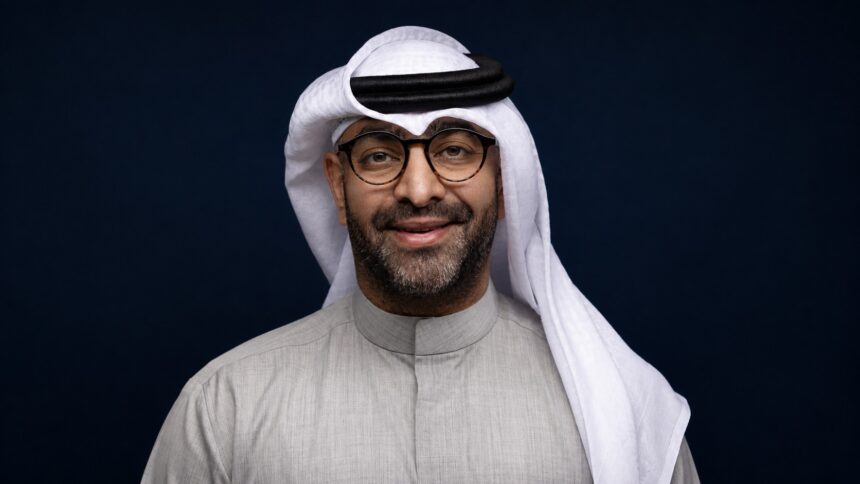
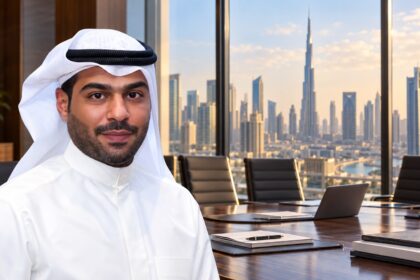
Russell Bedford AlBaker has announced a partnership with Arabic-first legal AI platform Oqood, integrating it into its document-heavy workflows. Legal Partner Abdullah AlBaker says first-pass review of standard commercial agreements is down to under an hour per document, preliminary research has fallen from half a day to as little as 30 minutes, and each fee-earner recovers an estimated eight to 12 hours a week.
Russell Bedford AlBaker and Oqood have announced a partnership to integrate the Arabic-first legal AI platform into the firm’s research, drafting, review and bilingual document workflows. Russell Bedford AlBaker combines legal counsel, auditing, financial advisory and Governance, Risk and Compliance services inside a single structure, bringing AlBaker & Associates’ legal practice together with Russell Bedford Kuwait. The wider Russell Bedford network operates across more than 100 countries and reported global fee income surpassing US$1.01 billion in 2025, ranking 16th worldwide by fee income among the international accounting networks included in its comparison.
Russell Bedford AlBaker says its client base includes sovereign-linked investment entities, family offices, listed and privately held companies, SMEs and founders across Kuwait and the GCC. Its legal work spans commercial transactions, corporate structuring, financial and debt restructuring, fintech, digital assets and regulatory work. AlBaker & Associates’ own published client roster also includes KPMG.
What distinguishes the Oqood announcement is not simply another technology partnership. It is the numbers the firm is willing to attach to it.
Eight to 12 Hours Recovered Per Fee-Earner, Each Week
The broader productivity figure has the clearest firm-level implication. “Across the team, we estimate each fee-earner is recovering eight to 12 hours per week that were previously absorbed by manual verification, retyping and translation checks,” says Legal Partner Abdullah AlBaker.
Those recovered hours are visible in individual workflows. “Preliminary legal research on Kuwaiti and GCC statutes that used to take half a day now takes 30 to 60 minutes, with citations to the exact article and instrument attached to each answer,” he says. The same compression runs through contracts: “First-pass bilingual contract review on standard commercial agreements has compressed from roughly three to four hours to under an hour per document.”
The saving reflects the workflow the platform replaces. Associates previously moved Arabic clauses into English-first systems, translated the output back and compared it manually with the original for shifts in legal register, and AI-assisted research needed a separate authorities check because answers were not tied to Kuwaiti and GCC primary sources. “Treating Arabic as a localisation afterthought, rather than a primary legal language, was a structural bottleneck across drafting, research and review,” AlBaker says.
He says the recovered capacity is moving into negotiation strategy, client advisory, regulatory engagement and business development, the work the firm considers genuinely differentiating.
Why Arabic Legal Work Needs More Than Translation
Research supports the underlying language problem. The 2025 BALSAM benchmark notes that large-language-model performance in Arabic continues to lag English, citing data scarcity, Arabic’s linguistic and dialect diversity, and morphological complexity among the challenges. In legal AI, researchers behind the 2025 ALARB benchmark similarly noted the shortage of substantial Arabic datasets for multistep legal reasoning, building their evaluation from more than 13,000 Saudi commercial court cases.
Oqood founder and chief executive Khaled Al-Rashed frames the gap in practical terms. “General-purpose models are fluent, but fluency isn’t law. They’re built English-first and they’ll give you a confident answer with no source behind it. GCC practice is bilingual and codified: you cite the exact article, or you don’t file. A general model paraphrases the law; Oqood points to it,” he says.
For Russell Bedford AlBaker the limitation was operational: preserving legal register, distinguishing related GCC frameworks, and tying each conclusion to a checkable authority before work reached a client. “We chose Oqood because it was built bilingual from day one, grounds its answers in verifiable citations to primary sources, and treats Arabic as a first-class legal language rather than a translation target,” AlBaker says. The platform pairs bilingual legal processing with a curated GCC source layer, so a lawyer can move directly from an answer to the cited underlying instrument rather than beginning the authorities search from scratch.
How Oqood Was Used on Live Matters
The firm’s clearest example is a cross-border financial restructuring involving a Kuwaiti obligor and creditors in multiple jurisdictions, the kind of mandate the alliance model exists to serve. AlBaker says Oqood processed the bilingual facility agreements, security documents and intercreditor arrangements, producing a clause-level comparison against the relevant Kuwaiti Commercial Code and Civil Code provisions with primary-source citations. “What would typically be a two-week due-diligence sprint was delivered in a fraction of that time, and the tabular review became the working document for negotiations with counterparties,” he says.
The firm identifies three further uses: benchmarking a proposed fintech framework against comparable GCC regimes for a regulatory-consultation submission; generating aligned Arabic and English first drafts of a shareholder agreement, board resolutions and governance policies in a family-office reorganisation; and mapping a regulated-sector client’s planned generative AI use against Kuwaiti data-protection and consumer-protection instruments, with a risk register produced in days rather than weeks.
For Al-Rashed, the choice of proving ground is the point. “They never treated Oqood as an experiment. They put it on real matters with real use cases: restructurings, regulatory submissions, reorganisations, which is the only proving ground that counts. It’s shown us that an Arabic-first system can carry the work the region’s best firms are known for,” he says.
The Practice Behind the Adoption
Those mandates reflect where the firm has built its depth. Abdullah AlBaker began in practice in 2003, qualified from Kuwait University and registered with the Kuwait Bar Association in 2007, and founded AlBaker & Associates in 2015. Alongside the firm’s transactional and advisory work, he is listed as an arbitrator before the Commercial Arbitration Centre in Kuwait and the Kuwait Capital Markets Authority, and before the Qatar Chamber, and has been an approved licensed practitioner before the DIFC Courts in Dubai since 2023 across litigation, arbitration, entity incorporation and legal consultation.
That background is not incidental to the technology story. Arbitration and regulatory practice run on precisely the discipline the platform is being asked to support: tracing a proposition to the governing text, in the language the tribunal and the regulator actually read. A firm whose work is routinely tested in those forums has a low tolerance for output it cannot verify.
The alliance structure extends the same logic commercially. With auditing, financial advisory and GRC capability alongside the legal practice, a restructuring or a governance mandate can be run inside one structure rather than coordinated across three providers, which is also why the bilingual document load that Oqood now absorbs was heavier here than at a conventional litigation practice.
The figures are internal estimates rather than independently audited benchmarks. The under-an-hour contract figure covers first-pass review of standard commercial agreements followed by lawyer validation, not final legal review, and the restructuring comparison reflects one mandate, limits the firm sets out itself.
“AI will not replace the lawyer’s judgment; if anything, it will make judgment more visible and more valuable, because it strips away the friction of routine research, translation and first-pass drafting,” AlBaker says.
For firms whose work moves between Arabic legal texts and English-language transactions, the partnership’s significance goes beyond faster documents. An Arabic-first platform, on the firm’s account, reduces the translation, source-checking and reconstruction work that its previous workflow required.
The objective is not to automate the judgment clients pay lawyers to exercise. It is to ensure that less of the lawyer’s day is spent reaching the point at which that judgment can begin.