

 ع
ع


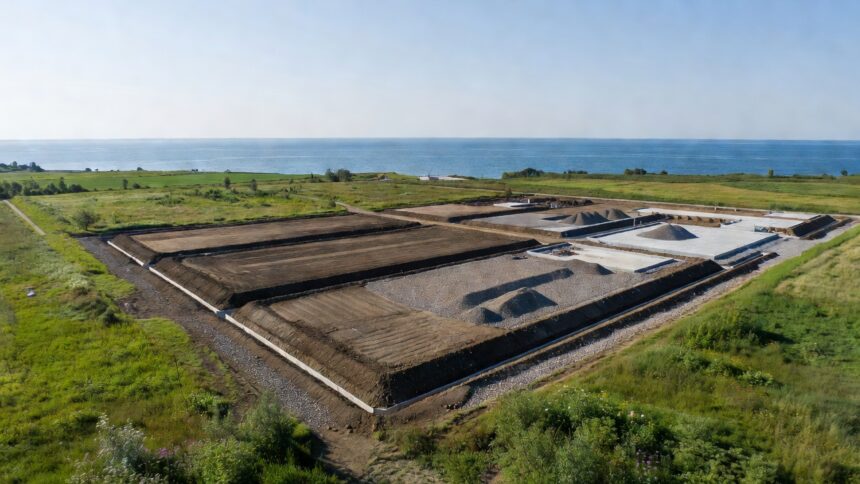
The amendment to the Act on the Preparation and Implementation of Investments in Nuclear Energy Facilities and Accompanying Investments introduces the possibility of dividing nuclear projects into stages that depart from earlier rigid requirements which had complicated construction sequencing in practice. It creates a framework for issuing building permits covering preliminary works that cannot operate independently before full facility completion according to the legislation. These permits fall into two categories with basic works covering items not relevant to nuclear safety that require no licence from the President of the National Atomic Energy Agency while qualified works demand such approval before the provincial governor can proceed.
Basic preliminary works benefit from a simplified single administrative procedure handled by the voivode for activities such as earthworks drainage and temporary facilities the updated act specifies. In contrast qualified preliminary works follow a comprehensive process conditional on securing the necessary atomic agency licence beforehand. The legislation further coordinates parallel proceedings so that applications for preliminary permits do not block or get blocked by those for the main nuclear facility and vice versa.
NucNet reported that the President signed the measure on 13 August 2026 with the goal of speeding nuclear deployment across the country. The changes respond to procedural bottlenecks in the original framework that was tailored more to conventional construction than the complex demands of nuclear builds the accompanying information published with the law indicated. Officials expect the simplifications to apply equally to large reactor projects and small modular reactors now under active consideration in Poland.
Poland’s nuclear programme targets an initial large reactor plant near Lubiatowo-Kopalino in the north where site preparation has advanced despite a 30-month delay announced by the Ministry of Energy in late 2024 that pushed construction start to 2028 and commissioning to 2036. An Arthur D. Little energy outlook placed the overall first-plant investment near 45 billion euros with significant state equity required alongside private financing that still awaits full European Union clearance. The amended Special Nuclear Act aims to cut regulatory timelines and investment risks for this and subsequent units as the country seeks to reduce its heavy reliance on coal which still generated over half its electricity last year.
A separate draft amendment identified as UD382 remains under governmental consultation and could introduce further efficiencies in proceedings before the National Atomic Energy Agency including acceptance of documentation submitted in English. The current changes take effect 14 days after publication in the official journal according to the signing details released by the presidential office. Polish authorities have maintained that all adjustments preserve the highest nuclear safety standards set by the atomic agency and international benchmarks.
The legislation forms part of Poland’s broader energy transition strategy that envisions nuclear power supplying around 23 percent of electricity by 2040 alongside a major expansion in renewables government policy documents show. Westinghouse and Bechtel hold the main contract for the first plant under agreements renewed in recent years while interest in small modular reactor technology has grown among industrial users seeking decarbonisation options. Implementation of the new provisions will now fall to the provincial governors the atomic agency and project developers coordinating under the revised framework.