
 ع
ع


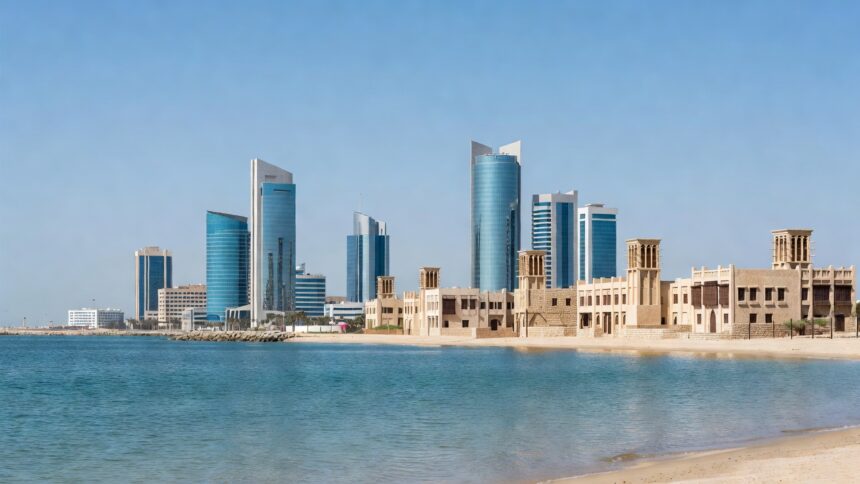
Bahrain’s Ministry of Interior announced the arrest of 41 individuals described as having links to the Iranian Revolutionary Guard Corps and expressing support for attacks against the country. The Public Prosecutor’s Office separately reported that the High Criminal Court handed down life sentences to nine more citizens in security-related cases. According to ABNA English, the developments prompted a statement from a group of Bahraini scholars that addressed the arrests of the clerics.
ABNA English reported that the scholars described the 41 individuals as prominent Shia scholars who had dedicated their lives to providing religious knowledge and guidance. The statement declared that the word of truth in Bahrain today is bound in chains. It added that the arrests served as a testament to the authorities’ approach toward argumentation and debate, according to the ABNA English coverage of the scholars’ position.
A Freedom House assessment of Bahrain placed the independent judiciary indicator at zero out of four points, citing that the king appoints all judges and that courts are subject to government pressure in politically sensitive cases. The same evaluation noted that judicial proceedings can place defendants at a disadvantage and that a 2017 constitutional change allowed military trials for civilians in security matters. Freedom House data also referenced a Bahrain Centre for Human Rights estimate of 4,500 political activists in prison as of 2022.
The Supreme Judicial Council issued a Code of Judicial Conduct that stresses judges must remain independent of external influence in all case deliberations. The document prohibits members of the judiciary from engaging in political activity while in office and restricts ex parte communications with parties involved in proceedings before them. It further requires judges to refrain from public criticism of rulings except in specific circumstances to clarify legal principles or affirm judicial impartiality, the council’s publication states.
Bahraini officials have repeatedly stated that the kingdom maintains no prisoners of opinion and that all convictions stem from criminal acts including terrorism, espionage or incitement. One parliamentary session saw a senior minister explain that constitutional provisions guarantee freedom of expression provided it does not undermine national unity or Islamic principles. The minister added that labeling convicted individuals as political prisoners mischaracterizes legal outcomes reached through due process.
An ABNA English article titled “Is Bahrain’s Judiciary Afraid of Confronting Scholars?” examined the judiciary’s handling of cases involving religious figures and referenced the scholars’ statement as evidence of broader tensions. The piece noted that the scholars drew on historical Islamic precedents such as the events of Karbala to argue that imprisonment does not diminish the reach of ideas. It concluded with the scholars’ assertion that accumulated policy decisions were leading the ruling apparatus toward a self-determined outcome, the report said.
The Bahrain Centre for Human Rights has tracked arrests of religious scholars and activists since 2011, producing periodic counts that authorities have contested as inaccurate. Government responses have emphasized that regulatory measures target only illegal activities and that licensed religious institutions continue to operate without interference when they comply with applicable laws. These exchanges reflect continued attention to the intersection of security policy, judicial decisions and religious discourse in the kingdom.