 ع
ع

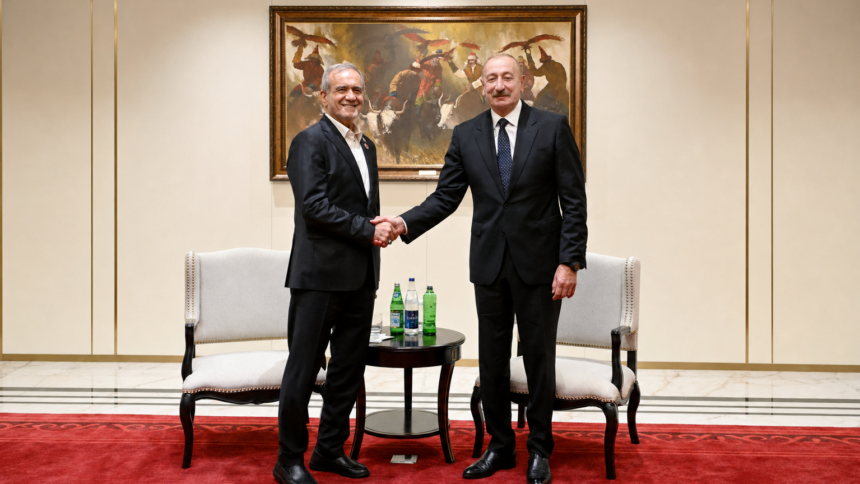
Iranian President Masoud Pezeshkian placed responsibility for ending the seven-month conflict squarely on the United States in a Fox News interview aired Thursday, according to a CNBC report. “It’s America that must choose whether it wants to end this or not,” Pezeshkian said when asked if the war could conclude by year-end. The Iranian leader sought to distance Tehran from further escalation by stating that the Houthis are responsible for their own actions and that Iran is not at war with Saudi Arabia, the CNBC account added. He described the Houthis as having their own separate issues amid continued missile strikes across the Middle East.
Saudi Arabia’s Grand Mufti adopted a contrasting position by telling troops to prepare to lay down their lives in order to fight the Houthis until the group is removed from power, CNBC reported. The comments underscored persistent regional divisions even as diplomatic efforts gained some traction. Pezeshkian has maintained that Iran remains ready for talks but will not accept unilateral demands from Washington.
China’s special envoy for the Middle East Zhai Jun told an event in Singapore that the Middle East situation featured prominently in the recent Trump-Xi summit and that the consensus reached there would prove critical to lowering tensions in the conflict, the CNBC article stated. Zhai’s remarks reflect Beijing’s ongoing push to position itself as a mediator in the dispute. A Brookings Institution analysis published four days earlier noted that China prioritizes maintaining calm in its relations with the United States while seeking an early end to the fighting to protect its economic interests.
The war erupted in late February 2026 after joint U.S.-Israeli strikes on Iran, Al Jazeera reported in a September 20 article that detailed Tehran’s latest conditions for a resolution. Those conditions, conveyed through Qatari mediators by Iran’s security chief Mohsen Rezaei, include an end to hostilities on all fronts including Lebanon, the release of frozen Iranian funds, the lifting of the naval blockade on Iranian ports and the cessation of U.S. interference in Iran’s internal affairs. Rezaei told Al Jazeera that Tehran had grown more battle-hardened since the opening phase of the conflict.
China has repeatedly urged both Washington and Tehran to sustain de-escalation momentum, according to a May 25 statement from Beijing covered by Pakistan Today. The Chinese Foreign Ministry has described an early negotiated solution as serving the interests of all parties and the global economy, citing disruptions to energy supplies and supply chains. A joint five-point peace proposal issued earlier with Pakistan called for reopening the Strait of Hormuz and broader regional de-escalation, the New York Times reported in April.
Iranian officials have indicated that Beijing applied behind-the-scenes pressure to accept an earlier short-term cease-fire, three Iranian officials told The New York Times in April. Chinese companies have continued some commercial support to Iran while Beijing publicly condemns military actions by the United States and Israel, according to multiple diplomatic accounts. The approach allows China to maintain relations with both sides without direct military involvement.