

 ع
ع


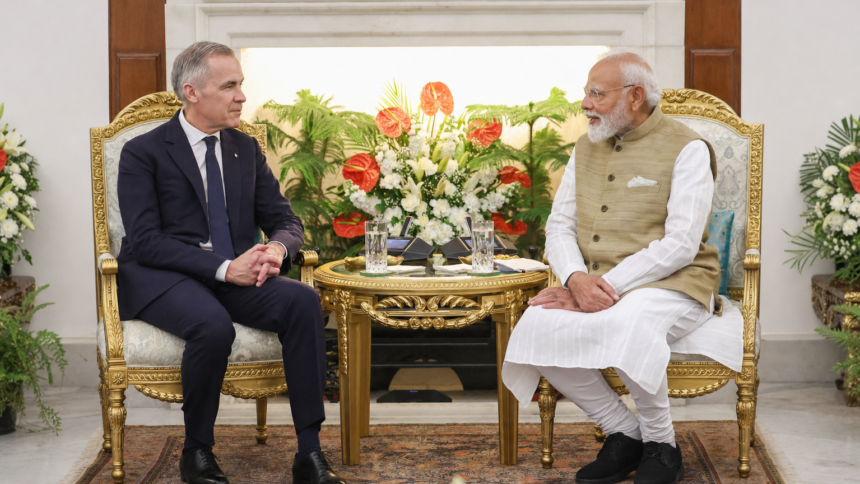
The New Indian Express reported this week that internal discussions on a new draft bilateral investment treaty have been completed and the text now awaits Cabinet approval, with Canada among the countries it will cover. The draft builds on India’s 2015 Model BIT as the country seeks to update its framework for protecting foreign investments while preserving regulatory authority. Officials have not yet disclosed a specific timeline for Cabinet consideration or the start of formal negotiations with Ottawa.
A March 2026 joint statement from India and Canada set a year-end target for concluding a Comprehensive Economic Partnership Agreement that includes investment provisions, according to reports from the Press Information Bureau. The two sides also reaffirmed their commitment to expediting a separate bilateral investment treaty during high-level talks in New Delhi. Bilateral trade between the countries grew 13.54 percent to USD 771.76 million in fiscal 2025-26, data compiled by Indian industry trackers show.
India adopted its current Model Bilateral Investment Treaty in December 2015 after the Ministry of Finance reviewed outcomes from earlier agreements that exposed the government to multiple investor-state dispute settlement claims. The 2015 text requires investors to exhaust domestic remedies for at least five years before seeking international arbitration and narrows the definition of investment to assets with identifiable risk and contribution to development. The Ministry of Finance has stated that the model has since enabled new treaties with Belarus, Kyrgyzstan and Brazil.
Earlier investment promotion and protection agreements with several partners, including elements relevant to Canadian investors, were among nearly 70 treaties India terminated after 2015 to align them with the updated model. Canadian direct investment into India has focused on sectors such as energy, infrastructure and information technology, though precise recent inflows remain modest relative to overall foreign direct investment statistics maintained by the Department for Promotion of Industry and Internal Trade. The proposed treaty is expected to clarify protections while limiting exposure to expansive claims, the New Indian Express assessment found.
Negotiations with Canada would form part of a broader effort to renegotiate or conclude investment pacts with more than a dozen countries that have expressed interest in updated terms, according to a 2023 policy paper prepared by the Ministry of Commerce and Industry that remains the latest public benchmark. The 2015 model removed the most-favoured-nation clause that had allowed investors to import more favourable standards from unrelated treaties, a change that has drawn both support and criticism from legal analysts. Any final treaty with Canada would still require ratification by Parliament after Cabinet clearance.
The New Indian Express noted that the draft text incorporates lessons from past disputes and aims to balance investor confidence with the government’s right to regulate in areas such as taxation, environment and public health. No official comment was immediately available from the Ministry of Finance or the Department of Economic Affairs on the precise provisions tailored for Canadian investors. Completion of the Cabinet approval process would clear the way for formal talks that have been discussed intermittently since the expiry of earlier investment arrangements.