

 ع
ع


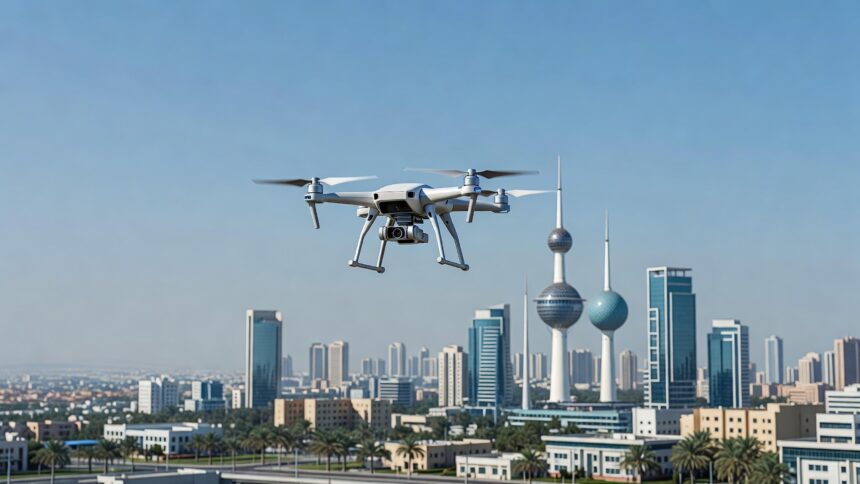
The decree-law, which entered into force upon its publication in issue No. 1808 of Kuwait Alyoum, establishes clear requirements for the registration, licensing and operation of unmanned aircraft and related equipment. It divides its 44 articles into six chapters that cover general provisions, the responsibilities of the General Directorate of Civil Aviation, registration and permit procedures, obligations and prohibitions, penalties, and final provisions. The legislation follows the Cabinet’s approval of the draft in August, as reported by Times Kuwait on August 11, and responds to concerns that unregulated use could endanger air traffic, national security and public safety.
According to the decree-law, the General Directorate of Civil Aviation will lead implementation while coordinating with the Ministry of Interior, military authorities and other government bodies. Operators must obtain prior approval from the Ministry of Interior before flying, and all aircraft require registration with the civil aviation authority along with an airworthiness certificate. The rules also mandate licenses for pilots and prior authorization for the import, manufacture or modification of drones and associated technology.
Prohibited actions include operating without permits, flying over airports or restricted zones, conducting nighttime flights without special clearance, and using drones in ways that threaten vital installations or privacy. Security and military personnel are empowered to intercept, disable or shoot down any aircraft posing risks to state security or public order. These measures build on an earlier April 2026 decision by the Ministry of Commerce and Industry that banned the sale and trade of drones pending further regulation.
Penalties outlined in the decree-law vary by violation severity, with breaches of Article 33 punishable by up to six months in prison and fines between KD 300 and KD 700. Violations of Article 34 can result in up to two years imprisonment and fines from KD 1,000 to KD 2,000, while Article 35 offenses carry up to three years in jail and fines ranging from KD 3,000 to KD 5,000. Repeat offenders face stricter sanctions, and penalties double if a violation causes an accident, with courts also able to impose confiscation of equipment and other measures.
Aircraft owners have been granted a one-year grace period to bring existing devices into compliance with the new requirements. Executive regulations detailing operational standards must be issued by December 31, 2026, according to provisions in the final articles. The framework aligns with broader efforts across the Gulf to standardize drone oversight, where regulators in neighboring states have similarly imposed registration, no-fly zones near critical infrastructure and comparable fine structures.
Times Kuwait reported in August that the Cabinet had emphasized the need for the law to protect airports, prohibited areas and public order while balancing legitimate uses of the technology. The decree-law explicitly lists risks including disruption to air navigation, compromise of national security and threats to individual privacy as justification for the comprehensive rules. Enforcement will rely on close coordination between civil aviation officials and security agencies to ensure consistent application.