
 ع
ع


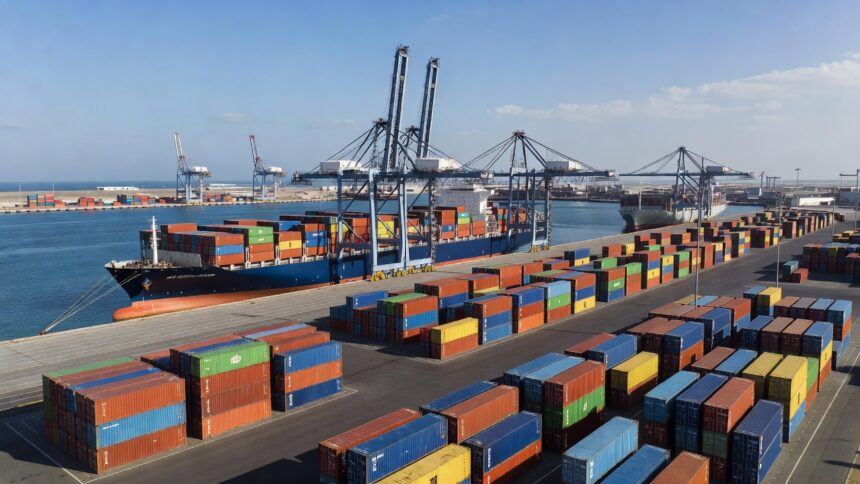
Red Sea Gateway Terminal and France’s CMA CGM Group have signed a definitive agreement to jointly develop and operate Terminal 4 at Jeddah Islamic Port, committing approximately $434 million to the project that will introduce a dedicated 2.6 million TEU facility adjacent to existing operations. The investment includes construction of deep-water berths able to accommodate the largest container vessels along with 10 ship-to-shore cranes and advanced digital systems designed to lift productivity and reliability at the strategic Red Sea gateway. Structured as a sub-concession under RSGT’s existing framework with the Saudi Ports Authority, the venture forms part of broader efforts to expand national port capacity while aligning with the kingdom’s economic diversification goals.[[1]](https://www.reuters.com/world/middle-east/saudis-rsgt-frances-cma-cgm-sign-434-million-deal-develop-jeddah-port-terminal-2026-08-25/)
The agreement, signed in Paris during a French-Saudi investment roundtable, follows an initial term sheet agreed in late 2025 at the Future Investment Initiative conference in Riyadh. According to industry reports, the partnership will raise RSGT’s total handling capacity at the port to 8.8 million TEU, reinforcing Jeddah’s position as a leading logistics hub on the Red Sea. This step arrives as regional trade faces disruptions linked to wider Middle East tensions, making diversified and modernized port infrastructure increasingly vital for global supply chains.[[2]](https://www.worldcargonews.com/business/2026/08/cma-cgm-rsgt-seal-us434m-jeddah-terminal-deal/)
Rodolphe Saade, chairman and CEO of CMA CGM Group, said in a statement that as the global trade landscape continues to evolve and infrastructures need to expand and modernize, terminals are becoming increasingly strategic assets. The French group’s participation combines its international network and operational expertise with RSGT’s local presence and established concession, a collaboration expected to deliver next-generation sustainability features and customer-focused services. Earlier comments from RSGT’s leadership similarly stressed the project’s role in accelerating infrastructure upgrades without disrupting ongoing terminal performance.[[1]](https://www.reuters.com/world/middle-east/saudis-rsgt-frances-cma-cgm-sign-434-million-deal-develop-jeddah-port-terminal-2026-08-25/)
Baker McKenzie advised CMA CGM Group on the strategic joint venture for the development and operation of Terminal 4 at Jeddah Islamic Port, the firm announced in a statement the following month. The legal team supported the French shipping and logistics major through complex negotiations involving multiple government and private stakeholders as well as regulatory considerations tied to port concessions in the kingdom. Such advisory work typically encompasses structuring the joint venture entity, financing arrangements and compliance with Saudi investment frameworks.[[3]](https://www.bakermckenzie.com/en/newsroom/2026/09/cma-cgm-jv-for-jeddah-islamic-port)
The project advances Saudi Arabia’s Vision 2030 objectives by reducing reliance on hydrocarbons and strengthening non-oil sectors including logistics and tourism, with ports serving as critical enablers for expanded international connectivity. Jeddah Islamic Port, already the largest on the Red Sea coast with more than 60 berths, stands to benefit from increased vessel calls and improved supply-chain resilience as a result of the added capacity and technology. Ownership details show the Public Investment Fund holds a significant stake in RSGT alongside other Saudi investors, underscoring the national strategic interest in the expansion.[[4]](https://www.eyeofriyadh.com/news/details/1787682121-)
Regional benchmarks indicate that comparable port developments across the GCC have contributed to measurable gains in trade volumes and efficiency, with Saudi facilities aiming to capture a larger share of Asia-Europe flows amid evolving maritime routes. The new terminal’s focus on ultra-large vessels and digital capabilities positions it to handle projected growth in container traffic while addressing bottlenecks that have occasionally affected Red Sea operations. Industry assessments project continued expansion in Gulf port throughput as global carriers seek reliable alternatives to congested or geopolitically sensitive passages.