

 ع
ع


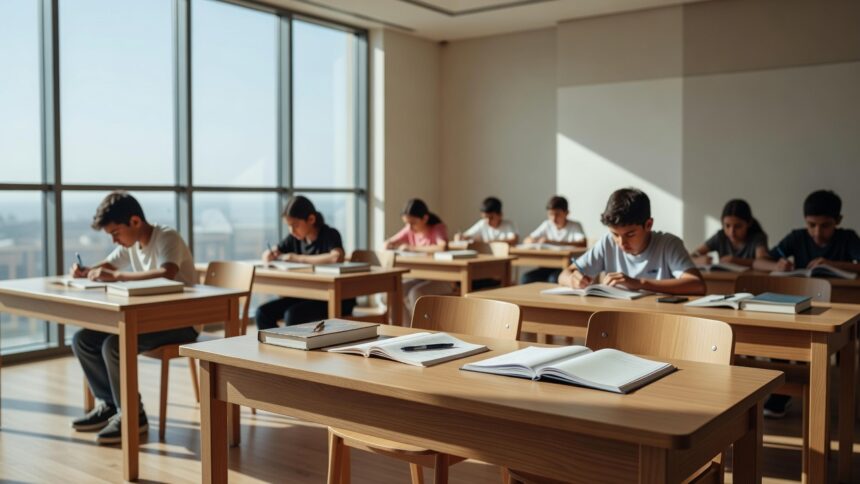
UAE schools have paired enforcement of last year’s ministerial ruling that bars students from bringing mobile phones into public and private institutions following the Ministry of Education curriculum with the introduction of digital citizenship lessons as the new academic year opened on August 31 2026. The policy carries penalties for violations including confiscation of devices for the full academic year while private schools have adopted measures such as requiring pupils to hand in phones for secure storage during the day. Noufal Ahmed founder and managing director of Woodlem Education told Khaleej Times that the UAE has taken a clear position on mobile phone use in schools aiming to create a focused disciplined and safe learning environment. Successful implementation depends on consistency communication and strong parent partnership he added while schools should use the policy as an opportunity to promote digital responsibility alongside wellbeing sports reading and creativity.
Ahmed noted that students need to understand the purpose behind the policy rather than see it simply as a restriction with schools setting clear expectations from day one and applying them fairly. Success should ultimately be measured by students’ growing digital maturity he said. At Diyafah International School in Abu Dhabi principal Nicole Haynes told Khaleej Times that the restrictions form part of a wider commitment to creating an environment where students can thrive academically socially and emotionally with clear expectations communicated to students parents and staff ahead of the new academic year.
Haynes emphasised that the approach is not about removing technology from education as the school continues to operate a Bring Your Own Device programme from Year 3 allowing students to use technology for structured learning under teacher supervision with appropriate safeguards. The distinction between personal smartphones and learning devices remains important in minimising distraction she added while combining clear expectations with consistency and strong home-school partnerships will help students adapt quickly. JSS Private School principal Chitra Sharma told Khaleej Times that France’s recent legislation banning social media access for children under 15 and mobile phone use in high schools offers cautionary lessons about logistics warning that many schools there lack the storage staffing and systems to deliver such a policy effectively.
Sharma said the UAE benefits from an existing regulatory framework and strong parent-school communication but sustainable compliance must go beyond confiscating devices since a ban controls behaviour for seven hours a day without necessarily teaching judgement for the remaining time. Schools therefore have an opportunity to help students understand when technology genuinely serves them she added incorporating digital wellbeing into everyday school life through discussions on screen habits social media online safety attention span and sleep. The Ministry of Education has built on the phone restrictions with a new policy for the 2026-2027 academic year that limits device use in core subjects including Arabic English mathematics and science in favour of books notebooks and pens according to Minister Sarah bint Yousif Al Amiri.
Al Amiri stated during a media briefing that officials had identified indicators calling for closer examination of intensive device use on writing reading language development concentration and the connection between thinking and writing. A pilot conducted the previous year found improvements in student performance in some subjects as well as significant gains in interaction and behaviour the ministry reported. UNESCO’s Global Education Monitoring Report data shows that 114 education systems equivalent to 58 percent of countries worldwide now maintain national bans on mobile phones in schools up from 24 percent in 2023 reflecting global concerns over classroom distraction cyberbullying and digital impacts on children.
Studies including one cited by The National involving 2500 pupils at nine public schools demonstrated that retention in device-free classrooms nearly doubled alongside improvements in behaviour discipline and peer relationships. Research from various jurisdictions has produced mixed but often positive findings on academic outcomes with some analyses reporting gains in test scores particularly after an initial adjustment period following implementation of restrictions. School leaders stressed that digital citizenship education aims to equip students with the skills to navigate technology responsibly beyond the school gates where personal devices remain accessible.