
 ع
ع


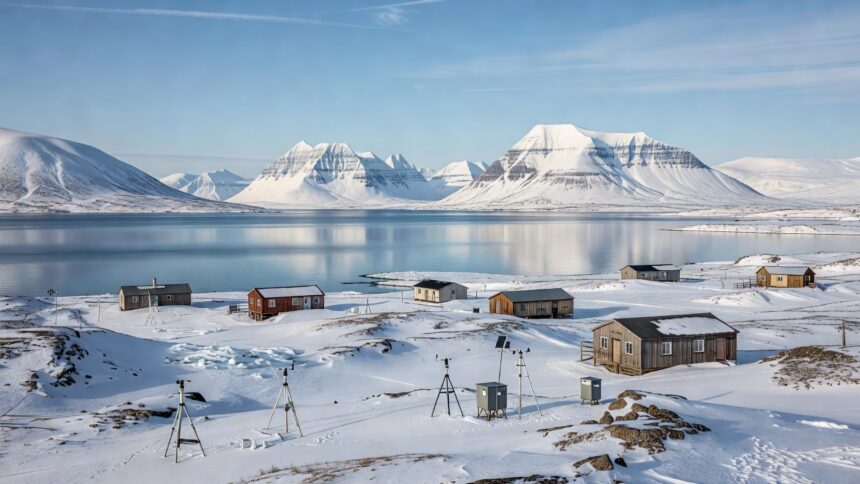
The Emirates Polar Program announced in a statement that the United Arab Emirates has officially joined the Svalbard Treaty following Federal Decree No. 125 of 2025, a development that grants the Gulf state equal rights to scientific activity in the Norwegian Arctic archipelago. The decree, issued the previous year, enables UAE researchers to pursue field missions and collaborate on climate-related studies in a region whose fragile ecosystems hold global significance for atmospheric and environmental monitoring. Svalbard, situated midway between mainland Norway and the North Pole, also houses the Global Seed Vault, which safeguards plant genetic material for international food security. The treaty promotes peaceful use of the area while barring military activities, provisions the statement tied directly to the UAE’s science diplomacy objectives.
Signed in 1920 and effective since 1925, the Svalbard Treaty now includes 49 parties with the UAE’s accession, records maintained by the United Nations Treaty Collection indicate. It recognises Norwegian sovereignty over the archipelago yet extends nondiscriminatory access for signatories to engage in research, economic pursuits and environmental stewardship across the territory. A review of treaty parties shows the pact has steadily expanded beyond its 14 original members to encompass nations across multiple continents focused on polar governance. The UAE’s entry aligns with its broader pattern of engagement in high-latitude science, building on initiatives in both hemispheres.
According to the announcement, membership will facilitate UAE fieldwork at Ny-Ålesund, one of the northernmost permanent civilian research stations where international teams study polar and atmospheric processes. The site hosts 14 independently operated research stations led by ten nations, information published by the Arctic Centre at the University of Lapland shows. UAE scientists will join existing participants from countries including China, India, Japan and South Korea in coordinated projects that address climate change impacts and long-term ecosystem shifts. Such access forms a practical extension of the legal framework the treaty provides for collaborative Arctic presence.
The move supports objectives of the Emirates Polar Program, which the statement described as advancing research across Arctic and Antarctic domains in line with national priorities for global climate action and scientific capacity building. Her Excellency Mariam Almheiri, chair of the program, said, “Joining the Svalbard Treaty demonstrates the UAE’s steadfast commitment to international collaboration and scientific advancement. This agreement opens an important and exciting chapter for the UAE’s engagement in Arctic science, enabling us to contribute meaningfully to global research efforts.” Almheiri added that the accession also strengthens opportunities for joint expeditions with leading nations to safeguard fragile ecosystems.
His Excellency Abdulla Balalaa, deputy chair of the Emirates Polar Program, stated in the announcement that the UAE’s accession reinforces its focus on science-based collaboration to address shared global challenges. Balalaa noted that climate action constitutes both a necessity and an opportunity, with the program positioned to deliver innovative research and practical solutions for polar regions through international partnerships. The statement further outlined five guiding priorities for the program, among them competitiveness in international cooperation, human capital development in science and establishing physical presence in both polar zones.
His Excellency Dr. Abdulla Al Mandous, director-general of the National Center of Meteorology and president of the World Meteorological Organization, emphasised in the release that the treaty opens avenues for direct contributions at Ny-Ålesund and similar stations. Al Mandous said the UAE would continue expanding its polar programs to strengthen partnerships that improve climate resilience for future generations. The country had earlier acceded to the Antarctic Treaty in December 2024 and taken part in the 47th Antarctic Treaty Consultative Meeting in Milan the following July, a participation detailed in a Ministry of Foreign Affairs release.