 ع
ع

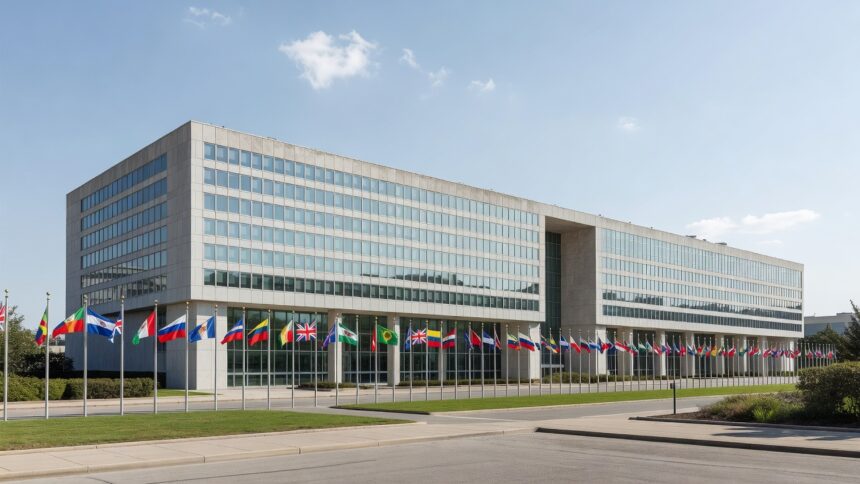
United Nations Secretary-General Antonio Guterres urged a coordinated global effort to set up guardrails for artificial intelligence during a press conference ahead of the UN General Assembly high-level week, according to reports published by News of Bahrain. He stressed the importance of a shared understanding to advance safe and responsible AI development while identifying when more powerful systems require stronger safeguards or additional risk management measures. Guterres warned that the world cannot afford a race to the bottom on AI safety amid geopolitical tensions and called for genuine international cooperation since AI risks do not stop at borders.
The UN chief highlighted three existential threats facing the world including runaway artificial intelligence, the climate crisis and deepening inequalities, News of Bahrain reported among coverage of the address. He noted that voluntary pauses which are isolated and unverifiable will not suffice if AI development needs to slow when risks become too great. Guterres advocated for guardrails that build trust by making AI safe, transparent and accountable with human dignity at its center.
Bahraini officials have actively engaged in related international forums this week, with Information and eGovernment Authority chief executive Mohammed Ali Al Qaed participating in the fourth UNESCO Global Forum on AI Ethics in Riyadh from September 14 to 17. Al Qaed addressed a high-level ministerial session on progress in implementing UNESCO recommendations on AI ethics and governance readiness assessments. He underscored Bahrain’s achievements in AI preparedness as part of its comprehensive development under King Hamad bin Isa Al Khalifa and guidance from Crown Prince Salman bin Hamad Al Khalifa.
The kingdom has developed a national AI policy focused on legal compliance, adoption, education and international cooperation, according to the Information and eGovernment Authority. This policy incorporates principles such as human oversight, transparency, fairness and accountability while aligning with GCC ethics guidelines. Bahrain’s Shura Council previously approved a draft AI regulation law that includes penalties for misuse ranging from fines to imprisonment as part of efforts to balance innovation with safety.
Bahrain signed a memorandum of understanding with Saudi Arabia’s SDAIA this month to enhance collaboration in data and artificial intelligence, the authority announced. The agreement covers exchange of expertise in emerging technologies, data governance, infrastructure development and joint research projects including large language models. Such partnerships support Bahrain’s goal of building a skilled AI workforce of 50,000 by 2030 through initiatives led by Tamkeen and alignment with the Economic Development Board.
Recent cooperation with the United States on AI opportunity partnerships further demonstrates Bahrain’s commitment to trusted development of the technology, News of Bahrain stated in related coverage. These include support for innovation, supply chain strengthening and private sector investment in advanced computing and semiconductors. Officials have positioned these steps as contributions to global calls for responsible AI that prioritize human control and ethical standards across borders.