 ع
ع

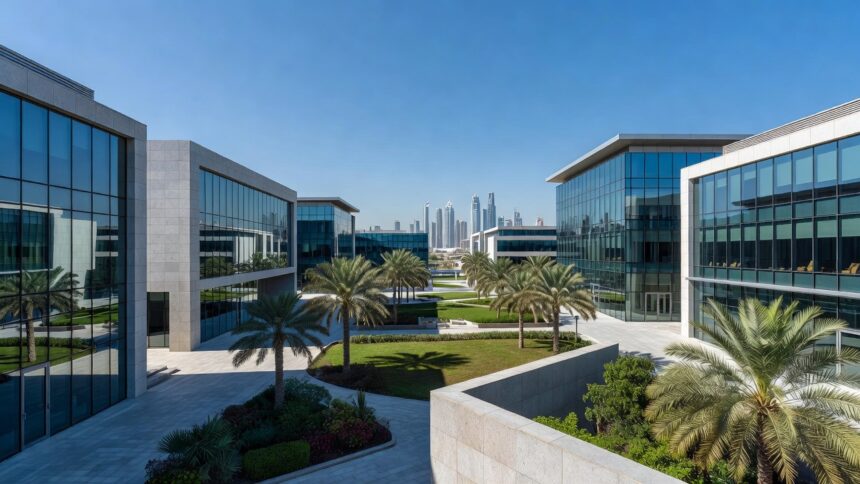
His Highness Sheikh Mohammed bin Rashid Al Maktoum, Vice President and Prime Minister of the UAE and Ruler of Dubai, approved the framework issued under Federal Decree-Law No. (31) of 2025 on Higher Education and Scientific Research. The system creates one national licensing reference while maintaining coordination with local authorities that oversee institutions in their jurisdictions. It introduces a data-driven monitoring platform that links higher education records directly to national databases managed by the Ministry of Higher Education and Scientific Research, allowing for real-time evidence-based supervision.
The framework spells out requirements that cover the full lifecycle of an institution, from initial establishment and risk assessments to licence renewals and ongoing compliance reviews. Governance rules demand a strict separation between owners, executive management and academic leaders to reinforce accountability and transparency across the sector. Additional provisions address financial sustainability through guarantees and audited statements, alongside student protection mechanisms and academic continuity plans that apply in varied operational conditions.
Dr Abdulrahman Al Awar, Minister of Human Resources and Emiratisation and Acting Minister of Higher Education and Scientific Research, described the approval as a step toward an integrated licensing approach. “The approval of the National Framework for Licensing Higher Education Institutions by His Highness Sheikh Mohammed bin Rashid Al Maktoum reflects the UAE’s commitment to building an integrated licensing system involving the Ministry of Higher Education and Scientific Research, local authorities and higher education institutions,” Al Awar said. “It provides greater clarity and consistency in licensing and oversight, reduces procedural duplication and facilitates access to services,” he added.
Knowledge and Human Development Authority figures show Dubai alone now hosts 41 private higher education institutions enrolling a record 42,026 students as of July 2026. An IMARC Group assessment placed the UAE higher education market at USD 170 million in 2025 and projected compound annual growth of 19.71 percent through 2034. The ministry stated that the framework will align with the National Higher Education Institutions Classification Framework to support quality improvements amid this expansion.
The Ministry of Higher Education and Scientific Research said the new rules will enhance institutional readiness to address emerging challenges while strengthening partnerships between universities and key economic sectors. Officials noted that the measures help develop a skilled national talent pool that matches labour market requirements and bolsters the UAE’s position as a competitive global centre for education and research. The framework applies uniformly to all higher education providers, including those offering technical and vocational programmes.
Federal Decree-Law No. (31) of 2025, which received cabinet approval late last year, supplies the overarching legislative structure for the licensing system and extends to institutions in free zones. The ministry indicated that the law promotes innovation in academic programmes, ties qualifications to the national framework and seeks closer integration between higher education outcomes and national development priorities. Data from the Federal Competitiveness and Statistics Centre recorded more than 57,000 new student enrolments nationwide in the 2024-25 academic year, a 13 percent rise that underscores the scale of activity now subject to the standardised rules.