

 ع
ع


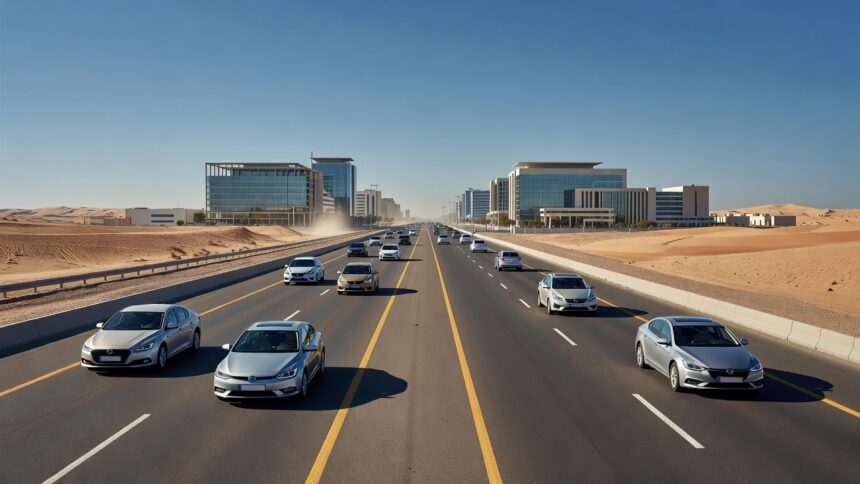
The Saudi Standards, Metrology and Quality Organisation announced the prohibition on vehicle entry in a circular after the 29 manufacturers did not file their 2026 supply plans in line with regulatory timelines. The restriction covers new light vehicles with a gross weight of up to 3.5 tonnes and will remain until the companies meet the submission requirement. Saudi Gazette reported that the move forms part of the organisation’s enforcement actions to secure adherence to the Corporate Average Fuel Economy standard for light vehicles.
According to the circular, manufacturers have until the end of 2026 to provide the outstanding plans, after which the temporary suspension may be reviewed. The Saudi Standards, Metrology and Quality Organisation stated that penalties for continued noncompliance include full suspension of vehicle imports into the Kingdom. This approach seeks to maintain pressure on automakers while allowing time for corrective filings.
The Saudi Gazette listed several of the affected companies, including LUXGEN Motor, Volvo Cars, Hozon New Energy Automobile, Zhengzhou Nissan Automobile, Hawtal Motor Group, Greenkar Auto Tech and Chongqing Livan Automobile Manufacturing. The publication noted that the full roster of 29 manufacturers had similarly missed the deadline for supplying data on planned volumes and efficiency performance. SASO data places the requirement as a core element of tracking progress toward prescribed fuel economy levels for each model year.
International Energy Agency figures show the Saudi Corporate Average Fuel Economy standard sets a 2026 target range of 16.9 to 22.6 kilometres per litre for light-duty vehicles, building on progressive annual increases that began in 2024. The standard, updated and published in 2024 for the 2024-2028 period, mirrors elements of earlier programs introduced in 2016 that the International Council on Clean Transportation said were patterned after United States structures and aimed to raise average fuel economy by nearly 20 percent in the initial phase. A review clause in the original framework called for setting subsequent targets by late 2018.
Saudi Vision 2030 documentation outlines national goals that include cutting carbon emissions by 278 million tonnes annually by 2030 and achieving net-zero emissions by 2060, with the transport sector forming a key focus for efficiency gains. The fuel economy regulation supports these objectives by compelling manufacturers to align supply strategies with energy targets across the vehicle fleet. Public records from the standards body indicate that the current enforcement action underscores the shift toward lifecycle oversight, where annual supply plans must detail energy consumption and deployment alongside product compliance.
The Saudi Standards, Metrology and Quality Organisation has applied similar compliance mechanisms in prior years to monitor adherence across the automotive sector. Manufacturers barred under the latest circular can resume imports once they file the necessary 2026 documentation and receive confirmation of acceptance. The organisation’s circular emphasised uniform application of the rule to all listed entities until full regulatory alignment is achieved.