

 ع
ع


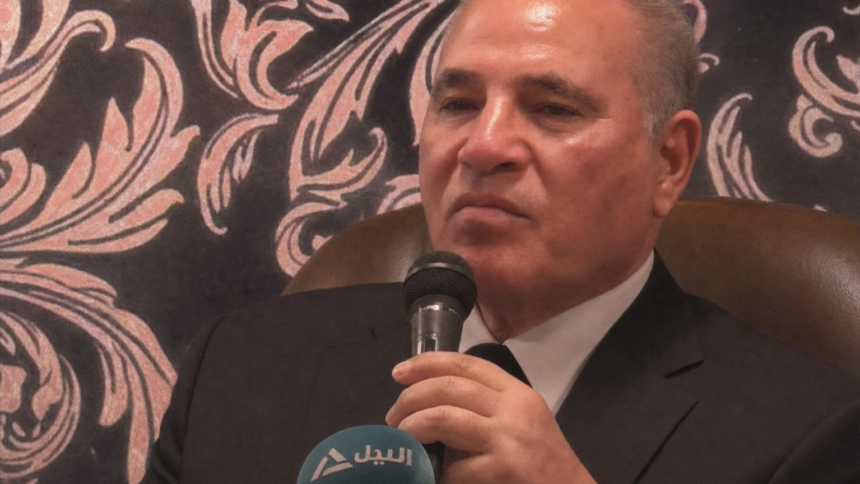
Egypt Today reported that Counselor Ahmed El-Zend passed away on September 26, 2026 following a short illness during which he had been under intense medical monitoring in hospital. The publication detailed how his condition had worsened to the point where doctors placed him on a ventilator in recent days. Family members, senior judiciary figures and public personalities were expected to gather for the funeral prayer scheduled after the Asr prayer on Saturday at the Field Marshal Tantawi Mosque in Cairo.
El-Zend served as Minister of Justice from May 2015 until his dismissal in March 2016, a tenure that followed his election as head of the Judges’ Club in 2009 and re-election in 2012, according to a BBC News Arabic profile published at the time of his removal from office. Youm7 noted in a 2023 retrospective that he succeeded Mahfouz Saber in the ministerial post after Saber resigned amid criticism of remarks deemed insensitive to the poor. His time at the ministry concluded with a cabinet decision on March 13, 2016 that ended one of the most visible phases of his public service.
During the Muslim Brotherhood’s time in power in 2012, El-Zend emerged as a leading voice against proposed changes to the Judicial Authority Law that would have lowered the retirement age for judges and potentially removed thousands from the bench, a stance that earned him the nickname “Lion of the Judges” among colleagues as Youm7 described in its coverage of prominent judicial figures. He publicly rejected the constitutional declaration issued by then-President Mohamed Morsi in November of that year. El-Zend also confronted the siege of the Supreme Constitutional Court by Brotherhood supporters, actions that positioned him as a central opponent of what Egyptian media outlets at the time termed efforts to undermine judicial independence.
A December 2012 incident saw protesters fire shots at El-Zend and pelt him with stones after he called for the dismissal of the prosecutor general, leaving him with head injuries, according to accounts compiled in Arabic-language biographical summaries that referenced the event. His opposition extended to resisting attempts to subordinate the judiciary to political influence during that period. These positions solidified his reputation within judicial circles as a defender of institutional autonomy, a theme repeated across profiles published in subsequent years.
Born in 1946 in the village of Damtno in Gharbia Governorate to a father who served as the local sheikh and head of the agricultural association, El-Zend graduated from the Faculty of Sharia and Law at Al-Azhar University in 1970, Egypt Today and parallel biographical reports confirmed. He began his career as a public prosecutor and advanced through judicial postings in multiple governorates, with extended service in Aswan and Dakahlia. Between 1991 and 1996 he worked in the United Arab Emirates, first as head of the Sharia Court in Ras Al Khaimah and then as legal advisor to the emirate’s crown prince.
Upon returning to Egypt, El-Zend presided over the Tanta Sports Club from 2001 to 2004 and became the first head of the country’s Sports Court, which adjudicated several high-profile athletic disputes, a 2015 Youm7 article on his appointment as minister recalled. He had earlier served on the Judges’ Club board in the 1980s and helped establish its branch in Tanta. These roles preceded his rise to lead the national Judges’ Club, which represents around 13,000 judges, and set the foundation for his later ministerial responsibilities.