
 ع
ع


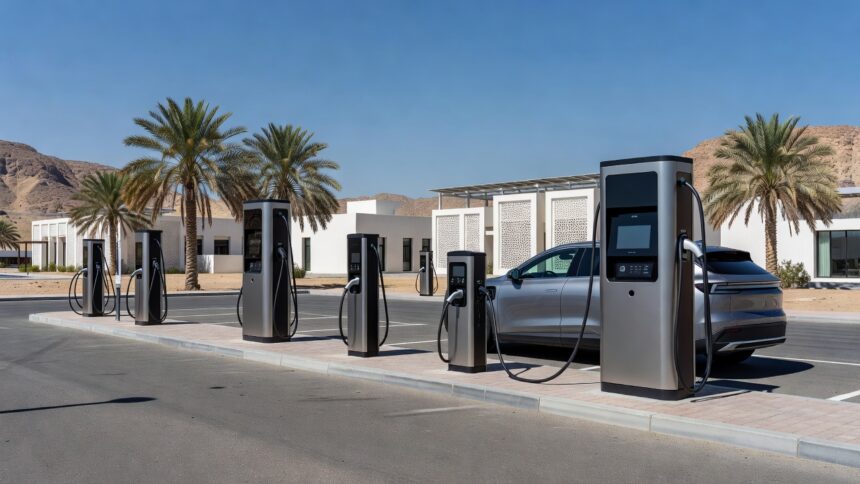
The ministry’s new tariff structure, developed in coordination with the Authority for Public Services Regulation and the Oman Net Zero Centre, sets charges at 50 baisa per kilowatt-hour for equipment up to 90 kilowatts. Rates increase to 90 baisa per kilowatt-hour for chargers between 91 and 180 kilowatts while the highest tier of 120 baisa per kilowatt-hour applies to stations of 181 kilowatts or greater. The tiered system links pricing directly to charging speed and power, ensuring faster stations command higher fees as the Sultanate expands its electric mobility network.
Authorities determined the levels following a detailed economic and operational study of charging stations across the country. The assessment sought to balance affordable access for drivers with sufficient returns to attract further private investment in the sector. According to the ministry, the resulting tariffs remain lower than equivalent gasoline costs, reinforcing the economic case for electric vehicles as Oman pursues its net-zero emissions target.
The pricing framework forms part of a wider regulatory push to organise the previously fragmented EV charging market where some operators had provided free services during initial rollout phases. Shell Oman Marketing and the First Electric Vehicle Company currently maintain active stations while several additional providers are advancing plans that include feasibility studies, grid connections and site assessments. The introduction of standard fees is expected to encourage scaled deployment by clarifying revenue expectations for new entrants.
Oman has accelerated its electric vehicle infrastructure build-out in recent months with the launch of the Shahin national digital platform that allows users to locate stations, monitor availability and manage payments through a single application. Private sector agreements unveiled at the Gulf Green Mobility Forum aim to add hundreds of high-speed chargers, including ultra-fast hubs up to 720 kilowatts that may incorporate solar generation and battery storage. These developments align with the new tariff regime by creating a more predictable operating environment for both operators and motorists.
The regulated tariffs take effect as EV adoption gains momentum in the Sultanate, where public charging points have so far been limited but are now expanding beyond major urban centres. The ministry noted that the pricing structure will improve user experience by removing uncertainty over costs while supporting long-term sustainability of the charging network. Officials indicated that ongoing monitoring will allow adjustments if required to maintain the balance between accessibility and commercial viability.
This latest step builds on earlier technical guidelines issued by the Authority for Public Services Regulation that define equipment standards and installation requirements for charging stations throughout residential, commercial and public locations. The combined regulatory measures are designed to prepare the country for larger fleets of electric passenger cars, vans and minibuses as part of its sustainable transport strategy. Industry participants have welcomed the clarity provided by the new fees, which should facilitate further investment commitments in the coming quarters.