
 ع
ع


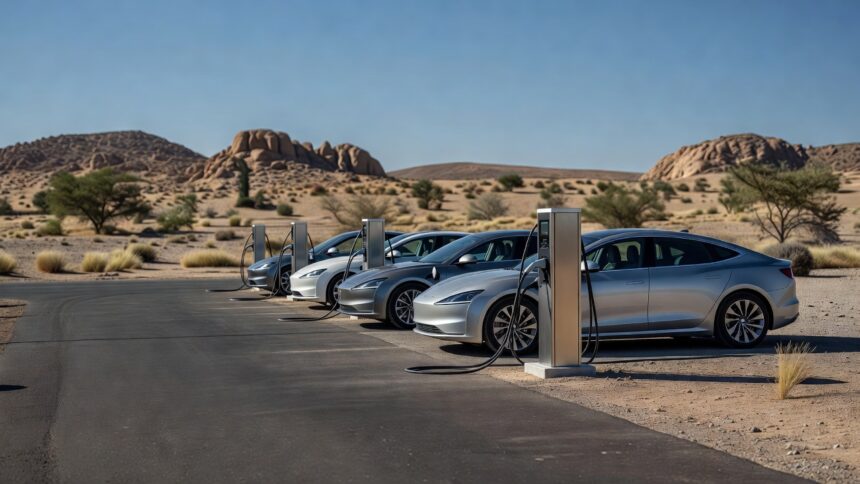
The ministry’s approved tariff sets charging at 50 baisa per kilowatt-hour for equipment with a capacity of 90 kilowatts or less. Rates rise to 90 baisa per kilowatt-hour for chargers between 91 and 180 kilowatts while units of 181 kilowatts or more will carry a fee of 120 baisa per kilowatt-hour. These charges were established after a detailed study of the economic and operational factors tied to electric vehicle charging stations, according to the ministry, which sought to balance user costs against the viability of investments for station operators.
The new fees form part of ongoing efforts to regulate Oman’s expanding electric vehicle charging market while improving price transparency for owners and users. The ministry reported that surveys were carried out among electric vehicle users, industry participants and other stakeholders to capture expectations and incorporate input into the final pricing structure. This initiative also aims to promote the long-term sustainability of charging infrastructure across the sultanate.
Operators currently active in the sector include Shell Oman Marketing and First Electric Vehicle Company, the ministry said. Several other companies have begun planning and feasibility work that encompasses site selection, technical reviews and coordination for electrical grid connections. The ministry indicated that these steps reflect growing interest in the market as demand for charging services increases.
Ministry of Transport, Communications and Information Technology figures show more than 5,900 electric vehicles had been registered in the first half of 2026. The national public charging network has grown to exceed 160 points with a target of 350 stations by 2027, according to the same official data. A Focus2Move industry assessment found that electric vehicle sales rose 70.8 percent year to date through July, achieving an 8.5 percent share of total vehicle sales in Oman.
The developments align with Oman’s National Net Zero Strategy, under which the Oman Net Zero Centre has outlined targets to cut carbon emissions by 3 percent by 2030 and 34 percent by 2040 before reaching net zero by 2050. The ministry noted that the cost of charging an electric vehicle at regulated stations continues to fall below the equivalent expense for gasoline-powered vehicles. This cost advantage supports both the economic case and environmental goals of the transition to electric mobility.
The tariff structure was developed in coordination with the Authority for Public Services Regulation and the Oman Net Zero Centre. The ministry emphasised that the regulated fees will provide a clearer framework for operators and users alike as the charging network expands to highways, commercial centres and inter-governorate routes. Public charging remains a central element in Oman’s broader push to modernise its transport sector.