
 ع
ع


Arab Times reported that nearly two years into his posting, Ambassador Troy F. Torrington described his time in Kuwait as marked by warm hospitality, strong cooperation and close relations with authorities and the diplomatic community. Torrington expressed considerable gratitude from the government and people of Guyana for Kuwait’s long-standing friendship. This year marked the 30th anniversary of diplomatic relations, which the ambassador characterized as extremely strong and very promising with mature foundations and good possibilities for further strengthening across several areas.
Since diplomatic relations were established, both countries have undergone tremendous transformations, with Guyana experiencing rapid change following its emergence as a significant oil and gas producer over the past five to seven years. According to the International Monetary Fund, Guyana’s economy has registered some of the world’s highest growth rates, averaging 47 percent annually since 2022, driven by oil production that reached 616,000 barrels per day in 2024. The ambassador noted that oil is a blessing but not Guyana’s future, underscoring the need for diversification into sectors such as agriculture and food processing.
Trading Economics data shows Guyana’s exports to Kuwait reached $266,610 in 2024, primarily in soaps, lubricants and machinery, while Kuwait’s exports to Guyana totaled just $5,320 in 2023. Torrington told Arab Times that he believes Guyana can serve as a reliable partner in the Gulf’s food security and economic diversification agenda. The ambassador pointed to meaningful collaboration opportunities in food security, where Guyana’s agricultural strengths could align with Gulf needs following the country’s economic transformation.
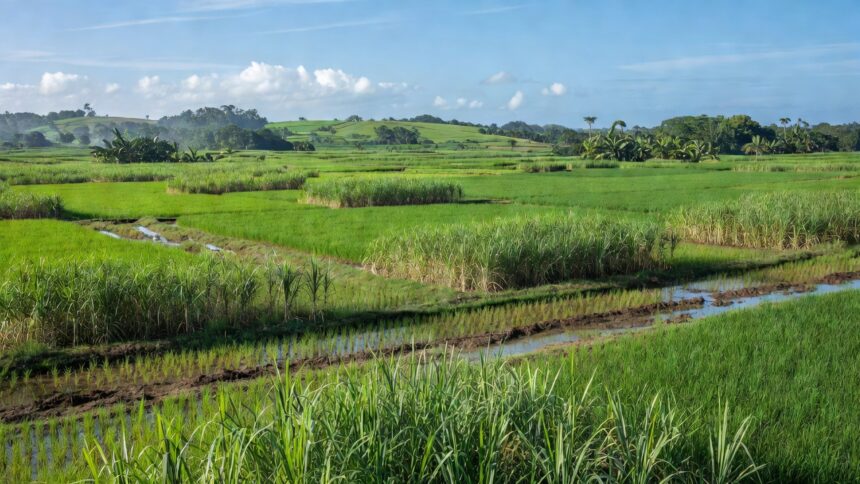
A report from Agriculture and Agri-Food Canada placed GCC agri-food and seafood imports at Can$83.5 billion in 2024, growing 6.7 percent annually since 2020, with leading categories including milled rice, cane sugar and food preparations. Guyana has positioned itself as a major rice and sugar exporter in the Caribbean and is expanding production of fruits, vegetables and livestock feed to support regional and international markets. Torrington emphasized that with improved infrastructure and investment, Guyana could help address supply chain demands while advancing its own diversification goals.
The ambassador highlighted considerable potential in tourism, noting that while Kuwait was among early interested markets, visitor numbers from Kuwait remain very low at fewer than 20 per year. He called for development of targeted tourism packages and initiatives aimed at the Kuwaiti and wider Gulf markets to promote Guyana as a premium sustainable nature destination. Such efforts could build on existing people-to-people ties, including social activities among diplomats in Kuwait.
Political collaboration remains important, with both nations cooperating in international forums, particularly at the United Nations, where they share interests as small states in a rules-based system focused on peace, security and development. During Guyana’s term as a non-permanent member of the UN Security Council, the countries worked closely on issues including the UN mission in Iraq, missing persons and Kuwait’s national archives. Torrington expressed Guyana’s commitment to peace and solidarity with Kuwait amid regional challenges, hoping for swift resolution of conflicts to restore normal trade routes.
In concluding his remarks to Arab Times, Torrington invoked a Guyanese saying to describe the value of close partnerships: “Very often, a friend nearby or a friend close at hand is better than a brother that is far away.” The ambassador’s comments reflect ongoing efforts to translate diplomatic goodwill into expanded economic engagement between the two nations.