ع



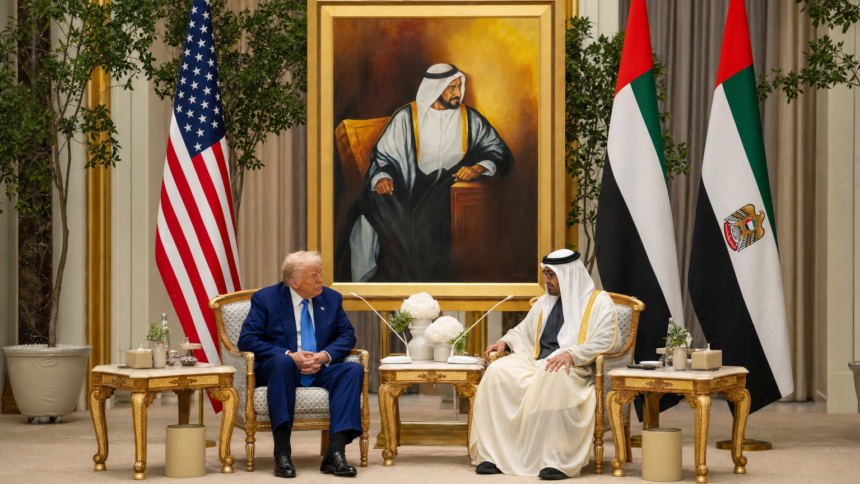
A Democratic takeover of one or both chambers of Congress in the November 3 midterm elections would give lawmakers greater power to investigate US technology deals with Gulf states, an analysis published by AGBI on October 16 found. Such scrutiny could complicate Gulf access to advanced American AI technology even as it increases pressure on President Donald Trump to conclude the ongoing war with Iran. Analysts suggested the region might welcome the added predictability that divided government could bring despite the trade-offs.
The Trump administration approved the sale of thousands of Nvidia semiconductors to UAE-based G42 and Saudi Arabia’s Humain as cooperation in advanced technology grew, according to the AGBI report. The Commerce Department went further in July by easing curbs on further transfers of microchips to the UAE. This built on a late 2025 decision that permitted the export of 35,000 advanced artificial intelligence chips to each of the two state-backed entities, a July report in EnterpriseAM detailed.
Democrats have expressed concerns that the advanced chips could be diverted to China’s military and have questioned whether the Trump family’s financial interests influenced the approvals, EnterpriseAM reported in July. If Democrats gain control, they are expected to launch investigations into these matters. A Democratic president in 2028 could go further by refusing to sell the highest-powered chips or limiting access to cutting-edge AI models.
“The view is, we’ll trade off a little bit of getting some of the policies we like in exchange for more predictability,” Andrew Leber, an assistant professor of Middle East and North African studies at Tulane University, said in the AGBI analysis. Kristian Coates Ulrichsen, a Middle East fellow at Rice University’s Baker Institute, added that there would be attempts to curb the no-holds-barred approach of the second Trump administration. Ulrichsen noted that the hundreds of billions in pledged investments had not delivered the security Gulf leaders hoped for due to decisions on the Iran conflict.
The UAE has committed to a 10-year investment framework worth $1.4 trillion while Saudi Arabia signed around $600 billion in deals in May 2025, an Arabian Business report published on October 26 stated. Qatar similarly announced a $1.2 trillion framework. These massive commitments span energy, defence, technology and other sectors, underscoring the Gulf’s deep stake in stable US relations.
Escalating tensions with Iran have already hindered AI infrastructure development across the Gulf, The Economic Times reported on October 29. Attacks on tech facilities have shaken investor trust and forced hardening of critical infrastructure, which will delay projects in the UAE, Saudi Arabia and other states. A return to normalcy depends in part on the midterm results and subsequent policy shifts.
The region has adopted a more realistic view after embracing the Trump administration too hastily in 2025, Ulrichsen told AGBI. Greater constraints on executive action could provide more predictability for long-term AI planning. Gulf states continue to pursue partnerships with American hyperscalers to advance their ambitions despite the political uncertainties.