

 ع
ع


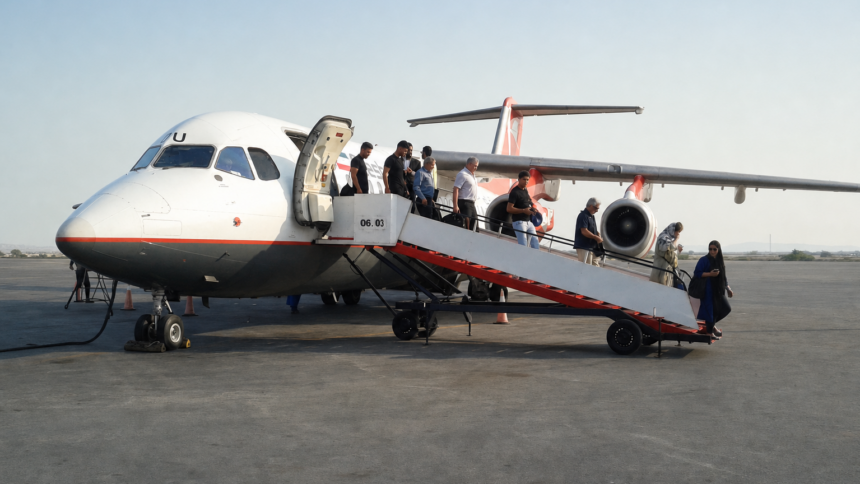
The United Arab Emirates has suspended flights by all Iranian airlines until further notice, a step taken after the US Treasury Department targeted Iranian carriers with sanctions on September 8, according to a report by AGBI. The US measures hit not only 27 Iranian airlines, including Qeshm Air, but also companies and individuals involved in aircraft procurement and aviation support in the UAE, Turkey, China, India, the UK, Malaysia and several other countries. Treasury Secretary Scott Bessent stated that airports and companies providing services to Iranian-operated aircraft, including fuel, landing facilities and ticket sales, could face secondary sanctions.
Iran responded to the UAE decision by banning flights from the Gulf state over its airspace, the AGBI report noted on September 24. Flydubai, which had only recently resumed overflights of Iran on routes to and from Baku in Azerbaijan, saw its aircraft diverted over Iraq and Turkey, with flight-tracking data from Flightradar24 confirming the rerouting. Dubai Airports and Flydubai did not immediately respond to requests for comment from the publication.
The US sanctions aim to further restrict Iranian airlines’ international operations, particularly in locations where they rely on foreign airports for refuelling, handling and passenger services, a US Treasury assessment found. This development occurs amid broader regional tensions that have disrupted aviation across the Middle East since earlier conflicts involving Iran, with multiple international carriers maintaining suspensions on routes to Dubai, Abu Dhabi and other hubs. Arabian Business reported that airlines including British Airways, Lufthansa and Singapore Airlines continue to pause services to the UAE through mid-September or late October 2026 due to ongoing security concerns.
Iranian carriers had maintained limited services to the UAE prior to the suspension, operating routes that connected Tehran, Mashhad and other cities with Dubai and Abu Dhabi. The latest restrictions compound challenges for Iran’s aviation sector, which has faced mounting pressure from successive rounds of US sanctions over the past decade. Data from aviation analysts indicate that Iranian airlines have increasingly depended on third-country support for aircraft maintenance and spare parts amid these longstanding restrictions.
The move aligns with a pattern of escalating measures between the US and Iran that have ripple effects across Gulf aviation networks. Kuwait’s civil aviation authorities and those in other GCC states have monitored similar developments, with regional airports adjusting protocols to avoid compliance risks. AGBI noted that the UAE’s action, while not detailed in an official government statement, was confirmed through Iranian state media channels.