

 ع
ع


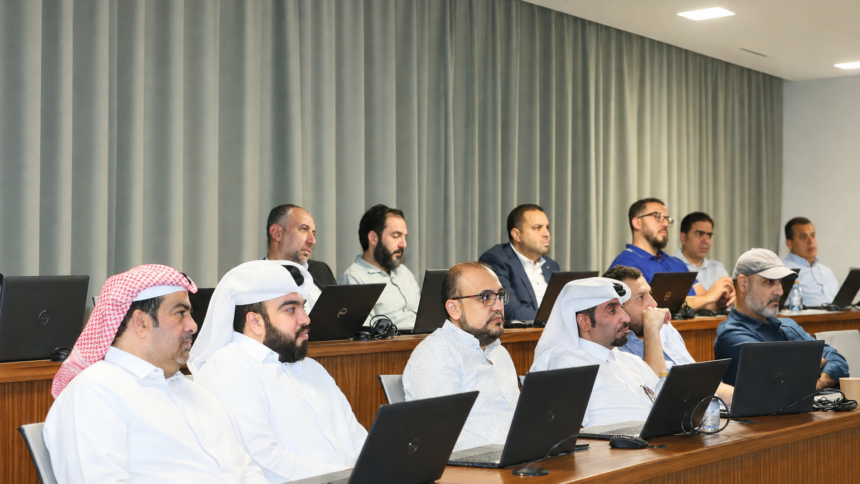
The National Cyber Security Agency organised multiple specialised training courses this year focused on implementing the National Data Classification Policy V3.0 and the National Information Assurance Standard V2.1, The Peninsula Qatar reported. These sessions, the tenth of their kind by May 2026, introduced participants to practical methodologies for securing information assets and managing security processes. The programmes aim to update educational content to match the latest developments in the field while aligning with labour market requirements.
In June 2026 the agency signed a cooperation agreement with the Community College of Qatar to enhance institutional collaboration in training, research and capacity building, according to NCSA President Eng. Abdulrahman bin Ali Al Farahid Al Malki. The pact facilitates the exchange of expertise between specialists and faculty, including joint workshops and awareness activities. It also supports the development of academic programmes that reflect evolving cybersecurity priorities, the agency stated.
Qatar’s cybersecurity market is expected to grow to $195.80 million by 2029 at a compound annual growth rate of 12.6 percent, a Cysec Qatar sector outlook indicated. Security services are projected to account for $76.43 million of that total in 2024 alone. Eighteen percent of Qatari businesses reported experiencing breaches in 2023, data presented at related industry events showed, highlighting the scale of challenges the strategy seeks to address.
The country attained Tier 1 status in the International Telecommunication Union’s Global Cybersecurity Index 2024, the NCSA noted, recognising its performance across legal, technical, regulatory, capacity-building and cooperation measures. The National Cybersecurity Strategy 2024-2030 builds on this foundation by emphasising shared responsibility among government, private sector and individuals. Recent initiatives include a June 2026 training and tabletop exercise on the Enterprise Cyber Crisis Management Framework that engaged more than 300 representatives from over 90 entities.
During the Cyber First Qatar summit and similar gatherings, officials have stressed the importance of proactive measures including AI-driven defence and zero-trust architecture. The NCSA has published security guidelines for predictive and generative AI applications to manage associated risks. Participation in forums such as the Arab-German Business Forum and international working groups further supports knowledge exchange on information and communications technology security.
Qatar also hosted the Cysec Qatar 2026 summit on September 8 and 9, which convened policymakers, experts and innovators to discuss defending against emerging threats while advancing national priorities. The event underscored recent steps such as joining the ISASecure certification programme for industrial control systems and signing the United Nations Convention against Cybercrime. These actions reinforce the state’s role as a regional hub for cyber resilience according to industry assessments.