 ع
ع

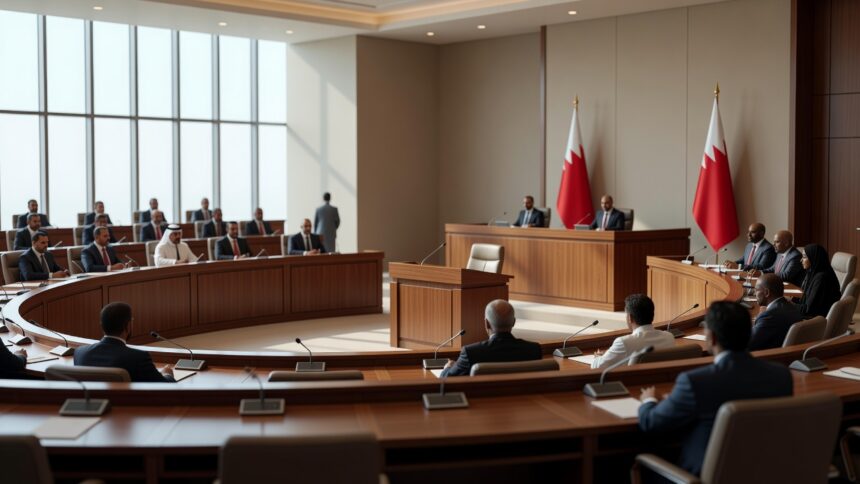
Bahraini MPs endorsed a series of legislative proposals that included far-reaching changes to regional excise taxation, Gulf Digital News reported from the parliamentary session on May 8. The centrepiece was an amendment to the GCC Unified Selective Tax Agreement signed by member states on June 1, 2025 and incorporated into Bahrain Decree No 22 of 2026, which permits each country to levy excise as a percentage of value, a fixed amount per unit or a hybrid model. Retail prices forming the tax base must now exclude both value-added tax and the excise component itself, a clarification designed to improve consistency across the bloc. The parliament also backed stricter penalties for agricultural drainage violations as part of the same urgent package forwarded to the Shura Council.
The excise overhaul introduces a direct link between taxation of sweetened beverages and their sugar content, a step taken in line with World Health Organization recommendations that several GCC states have begun adopting to influence consumption patterns. Saudi Arabia, for example, is scheduled to replace its flat 50 percent rate with a tiered sugar-based system from January 1, 2026, according to an Ernst & Young regional tax alert issued the previous December. Under the amended GCC framework, member states will enjoy wider autonomy in setting collection procedures while preserving the agreement’s core harmonising purpose that has governed selective taxes on tobacco, energy drinks and sugary products since its initial rollout between 2016 and 2019.
Lawmakers simultaneously approved Bahrain’s accession to the Annex of the Multilateral Competent Authority Agreement on automatic exchange of financial account information, extending the country’s commitments to cover digital asset reporting. The Organisation for Economic Co-operation and Development developed the related Crypto-Asset Reporting Framework precisely to capture tax-relevant data from rapidly expanding crypto markets that previously operated with limited visibility. OECD publications place more than 100 jurisdictions in similar exchange networks, which rely on standardised formats to reduce cross-border evasion and improve compliance.
Parliamentarians further recommended conclusion of a mutual taxation agreement with Saudi Arabia, completing a set of measures that reflect deepening bilateral fiscal coordination within the Gulf. The original GCC Unified Selective Tax Agreement, first concluded in 2015, has supplied a common foundation for non-oil revenue streams that Gulf finance ministries have expanded in the past decade. A KPMG review of Bahrain and GCC tax developments released in May 2026 noted that such amendments form part of broader efforts to refine administrative mechanisms without disrupting the regional uniformity established under the initial pact.
Bahrain introduced its domestic excise regime in 2018, applying 100 percent rates to energy drinks and 50 percent to both tobacco and sweetened beverages, a schedule that Central Bank of Bahrain statistical releases showed contributed materially to fiscal receipts in subsequent years. The latest parliamentary action builds directly on that base by offering more nuanced tools for product-specific taxation while aligning with parallel reforms under way elsewhere in the bloc. All approved items now await Shura Council scrutiny before advancing toward final ratification.