

 ع
ع


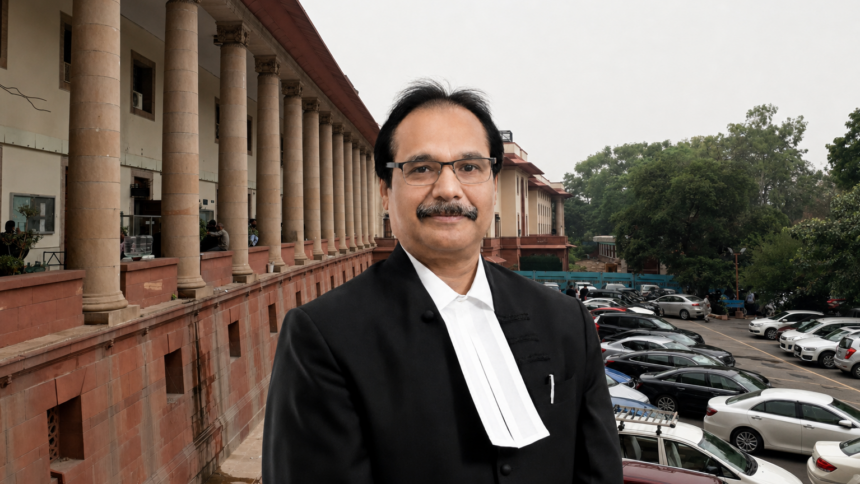
The West Zone Regional Judiciary Conference opened Saturday in Gwalior under the auspices of the Madhya Pradesh State Judicial Academy, with Supreme Court Justice Prashant Kumar Mishra stating that justice delivery extends beyond knowledge of legal provisions alone. Justice Mishra highlighted the difficulties in an era of deepfakes of distinguishing authentic from fabricated evidence, according to a Dainik Jagran English report. The two-day event at the new campus of Vijayraje Sindhiya Agricultural University has drawn participants from the Supreme Court, the high courts of Madhya Pradesh, Bombay, Gujarat and Rajasthan, along with directors of state judicial academies and subordinate court officers.
More than 60 judges and officials are attending the sessions themed around expanding the dimensions of judicial education, Dainik Jagran English reported on September 26, 2026. Discussions during the opening day focused on improving training quality while addressing artificial intelligence, digital evidence, cyber law and the implications of recent legislative changes. Justice Mishra’s inaugural remarks set the tone for deliberations that will continue through Sunday on blending traditional and technology-driven approaches to judicial work.
Organizers structured five technical sessions to cover judicial ethics, inclusive justice and the practical effects of new criminal laws that took effect in July 2024, the publication noted. These statutes, including the Bharatiya Nyaya Sanhita, Bharatiya Nagarik Suraksha Sanhita and Bharatiya Sakshya Adhiniyam, replaced colonial-era codes and introduced updated provisions on electronic evidence and timelines for trials. A National Judicial Data Grid assessment has shown more than 50 million pending cases across Indian courts, underscoring the need for technological efficiencies addressed at the conference.
Artificial intelligence literacy and its role in judicial decision-making formed a central thread, with participants reviewing tools already deployed such as SUPACE for research assistance and SUVAS for document translation. An Oxford Institute of Technology and Justice review found that while India lacks dedicated AI legislation for courts, high courts including Kerala have begun issuing policy guidelines to govern tool usage and training for judges.[[1]](https://www.techandjustice.bsg.ox.ac.uk/research/india) The Gwalior gathering seeks to develop uniform recommendations for the western region that align with Supreme Court efforts to create an apex AI oversight body.
Conference sessions on Sunday will shift emphasis to the digital transformation of judicial education, exploring generative AI, data protection and blended learning models that combine in-person, virtual and self-paced modules, according to the agenda outlined by Dainik Jagran English. Judicial academies from the four states will share best practices on incorporating these technologies without compromising ethical standards or data security. The event builds on prior regional conferences that have incrementally expanded technology adoption across subordinate courts.
Madhya Pradesh High Court and subordinate judiciary representatives are particularly focused on implementation challenges of the new laws in high-volume districts, the report indicated. Recommendations emerging from the conference are expected to inform future training curricula at state academies and contribute to national discussions on responsible AI integration in the justice system. The gathering concludes with a valedictory session that will consolidate outcomes for dissemination to participating institutions.