
 ع
ع


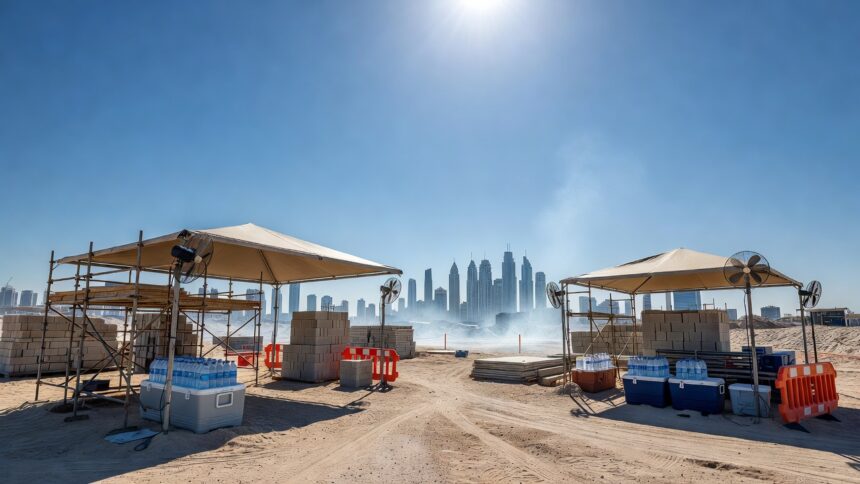
The Ministry of Human Resources and Emiratisation has confirmed the annual midday work ban will take effect on June 15 and continue through September 15 with the prohibition covering the hours of 12:30 p.m. to 3:00 p.m. Employers must supply shaded areas, fans or other cooling systems and ample drinking water for staff during the restricted period according to the ministry. The measure which is now in its 22nd year forms a core element of national occupational safety protocols designed to reduce heat-related risks for labourers.
According to the ministry certain tasks remain exempt if halting them would create technical difficulties such as ongoing asphalt paving or concrete pouring operations. Emergency maintenance on critical infrastructure including water supply electricity networks and road traffic systems also qualifies for exemption from the ban. Additionally any project requiring official permits due to its potential disruption of public activities can proceed with prior approval from relevant authorities.
Violators of the midday ban will incur fines of Dh5,000 for each worker involved with the total penalty not exceeding Dh50,000 per case the ministry reported. The ministry recorded 99 per cent compliance across companies during last year’s Heat Stress Protection campaign. That initiative included the installation of 10,000 air-conditioned rest areas for delivery personnel throughout the country.
The UAE regulation mirrors similar protections in neighbouring Gulf states where extreme summer temperatures pose comparable threats to worker health. Oman is preparing to activate its own three-month midday ban beginning in June according to a Gulf News compilation of regional measures. These seasonal restrictions have become standard practice across the GCC since the mid-2000s to address occupational hazards linked to heat exposure.
Implementation of the ban relies on employer cooperation and ministry oversight with inspections expected to intensify over the summer months. The framework requires companies to reorganise work timetables so that outdoor duties fall outside the peak heat window whenever possible. Data from previous campaigns show high adherence rates that have improved incrementally with each passing year the ministry figures show.