ع



The UAE Aid Agency allocated $8.4 million under presidential directives to support Chad’s response to the El Niño climate phenomenon, which has worsened food insecurity and raised risks of hunger and malnutrition in multiple provinces. The assistance, distributed through the National Food Security Office in N’Djamena, focused on urgent food supplies for vulnerable communities facing reduced rainfall and declining agricultural output. Dr. Tareq Ahmed Al Ameri, chairman of the UAE Aid Agency, stated that the UAE continues to respond to climate-driven crises by combining immediate humanitarian aid with measures to build long-term resilience against food insecurity. The move forms part of broader 2026 actions that WAM reported as reflecting the country’s commitment to international cooperation on nutrition and recovery programs.
A March partnership between UNICEF, the Mohammed bin Rashid Al Maktoum Global Initiatives and the Children’s Investment Fund Foundation committed $300 million to prevent and treat malnutrition in children, with an initial UNICEF donation of $100 million intended to leverage an additional $200 million for scaled-up global programs. The Edge of Life Campaign, launched during Ramadan by Sheikh Mohammed bin Rashid Al Maktoum, targets rescue of five million children from hunger while protecting another 30 million from nutritional deficiencies. MBRGI described the alliance as advancing sustainable projects that address the fact that malnutrition contributes to 45 percent of deaths in children under five worldwide. The initiative aligns with the UAE’s role in global efforts to reduce child mortality linked to severe acute malnutrition.
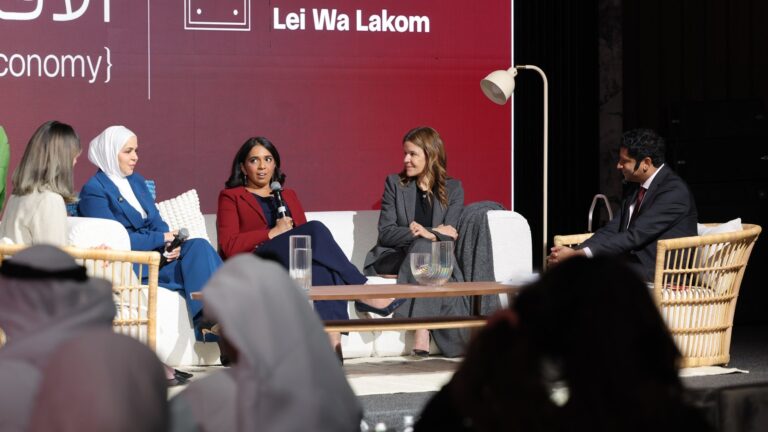
In April the UAE chaired the 38th FAO Regional Conference for the Near East, hosting a ministerial meeting in Al Ain alongside the Emirates Agriculture Conference and Exhibition. Mohammed Saeed Al Nuaimi, under-secretary at the Ministry of Climate Change and Environment, led preparatory talks with more than 200 representatives from across the region on strengthening supply chains, diversifying food sources and deploying innovative solutions. A FAO assessment found that 77.5 million people in the Near East and North Africa, or 15.8 percent of the population, experienced hunger in 2024 while four in ten faced moderate or severe food insecurity. The conference underscored coordinated responses to overlapping challenges including water scarcity, with agriculture accounting for about 85 percent of freshwater withdrawals in the region.
The UAE Food Bank, operating under the Mohammed bin Rashid Al Maktoum Global Initiatives, launched the Bank of Goodness in the Month of Giving campaign to distribute eight million meals from surplus food during Ramadan both inside the country and abroad. The effort encompassed five integrated initiatives including Charity Fridge, My Home Without Waste, Meer Al Khair, Zabeel Iftar and Recycle Re-life, which together promote circular economy principles and cut carbon emissions from waste. UAE Food Bank officials said the campaign supports the National Food Security Strategy 2051 by reducing food loss and advancing community solidarity. Since its establishment in 2017 the bank has reached more than 128 million beneficiaries through surplus redistribution programs.
Global Food Week opened in Abu Dhabi in early October under the patronage of Sheikh Mansour bin Zayed Al Nahyan, showcasing innovations in lab-grown meat, nutrient recovery and climate-resilient agriculture to attract investment and foster international collaboration. The accompanying Global Food Security Summit highlighted the UAE’s food and agricultural trade, which reached $41.8 billion in 2025, while spotlighting Dubai Food Tech Valley’s success in drawing $50 billion for sustainable system development. Ahmad Mukhtar, FAO representative in the UAE, told WAM that the platform advances knowledge exchange on water efficiency, climate resilience and sustainable agriculture in line with the National Food Security Strategy 2051. Participants examined how technology can mitigate supply-chain disruptions exposed by recent regional conflicts and climate events.
The ne’ma national initiative aims to halve food loss and waste by 2030 through systemic changes across production, transport, retail and hospitality sectors, with community participation identified as essential for measuring and addressing root causes. Amna bint Abdullah Al Dahak, minister of climate change and environment, said reducing waste enhances the food system’s resilience by maintaining supply even under pressure from production shocks. Central Statistical Bureau data and related government assessments place the UAE’s expatriate population and import dependence among factors that amplify the importance of diversified sourcing and strategic reserves. These domestic measures complement the UAE’s external partnerships, ensuring alignment between local efficiency gains and global humanitarian contributions.