ع




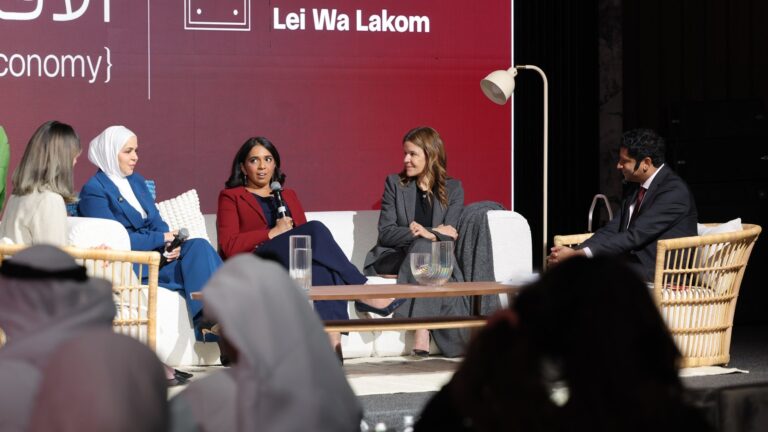
Participants at the Sharjah Investment Forum on Thursday detailed how the UAE has progressed from artificial intelligence pilot projects to real-world deployments that enhance productivity, boost sales and draw capital, according to reporting by Khaleej Times. Pablo Charron, founder and chief executive of the UAE-based startup Ayan, told the gathering that the true test of AI lies in commercial results rather than technical sophistication. The discussions emphasised that trust, supportive regulation and fast adoption have combined to transform the technology into a measurable growth driver across the region.
Figures presented during the forum show that AI and AI-enabled companies in the Middle East and North Africa raised $678 million in the first half of 2026, an 81 percent increase year on year, with the UAE accounting for 93 percent of the total. The country’s position received additional impetus from a UAE Cabinet decision earlier this year to place half of government services on agentic AI within two years. Industry representatives at the event stated that the technology is already reshaping operations in finance, healthcare, media and marketing.
A Deloitte Middle East assessment found that 90 percent of UAE business leaders are increasing their AI spending while 84 percent expect associated revenue growth, yet only 16 percent report seeing that impact to date. Aditi Nitin, Partner and AI and Data Leader at Deloitte Middle East, said in a related analysis that AI has moved from the innovation lab to the boardroom, with chief executives now focused on redesigning enterprises around the technology safely and at scale. The consultancy’s data places the UAE among the region’s most active adopters, where government initiatives and private-sector efforts are advancing together.
McKinsey data released last week indicates that 89 percent of organisations now employ AI in at least one business function, although only about 6 percent qualify as high performers that attribute substantial financial results to the technology. Thomas Pramotedham, chief executive of Abu Dhabi-based Presight, told Khaleej Times in a separate interview that the central difficulty increasingly lies in securing organisational adoption and driving internal change rather than in building the systems themselves. Such findings align with the forum emphasis on converting pilots into production environments that deliver returns.
Dataiku-commissioned research published in September 2026 revealed that 62 percent of UAE chief information officers estimate their organisations run more than 50 AI agents in production, the highest share among eight countries surveyed and well above the global average of 9 percent. Sid Bhatia, Area Vice President and General Manager for the Middle East, Turkey and Africa at Dataiku, said the UAE has built a strong foundation for agentic AI through large-scale deployment, specialist hiring and effective incident prevention. Every UAE CIO surveyed in that study reported heightened board-level expectations for measurable AI returns compared with 2025.
Hub71 ecosystem startups in Abu Dhabi had raised more than $2.7 billion by the end of 2025 and generated $1.5 billion in revenue, illustrating the broader ecosystem that supports the shift toward commercial AI applications, according to forum-adjacent reporting. Real estate and logistics sectors have also seen related gains, with warehouse rents rising roughly 40 percent since mid-2024 safety reviews that intersect with AI-driven efficiency tools. The cumulative investment and policy signals point to sustained momentum in turning artificial intelligence from experimental technology into a core element of enterprise strategy.