
 ع
ع

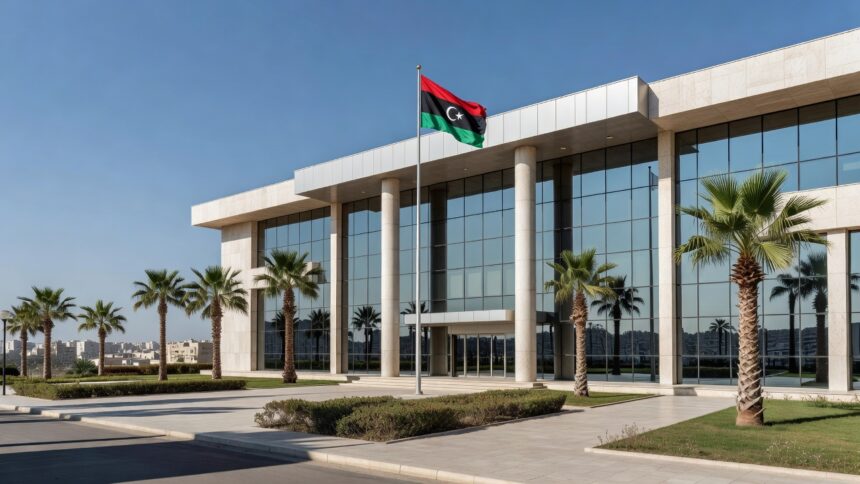
The Administrative Control Authority reviewed findings from a dedicated committee during a meeting led by chairman Abdullah Qaderbouh with committee head Ali Mansour and member Khaled Hassouna. The committee had identified the companies as subject to suspicion over irregularities in documentary credit procedures. The authority subsequently directed that the firms be added to a blacklist and formally requested the Central Bank of Libya to halt all dealings with them as well as any procedures tied to their letters of credit pending thorough verification of the transactions. This step reflects the body’s mandate to oversee administrative compliance across public and private sectors.
A committee assessment found that an integrated electronic system linking the Central Bank of Libya with customs and tax authorities as well as the Administrative Control Authority should be completed without delay. Such a platform would permit continuous tracking of letters of credit from initial issuance through the physical release of imported goods and final payment collection. The recommendation also encompasses the identification of all unregistered importing companies and the full integration of beneficiary firms into the national tax system to close existing oversight gaps.
The committee further advised contacting 58 companies that have not fulfilled their tax obligations so they can regularise their status. Those that decline to comply would face blacklisting under the same procedures applied to the larger group of 500 firms. Additional proposals included the establishment of reference prices for imported goods and raw materials alongside improved mechanisms for sharing data on shipments, containers, letters of credit and associated financial transfers.
According to The Libya Observer, the measures form part of a sustained push to address recurring irregularities in Libya’s foreign trade financing. Earlier in 2026, Libya Herald reported that the Economy Ministry had asked the Central Bank to suspend 85 companies after they secured $130 million in letters of credit for cooking oil imports that never arrived. In a separate March case detailed by the same outlet, customs authorities identified 11 companies that obtained $54 million without any corresponding goods delivery and referred them to the Public Prosecutor.
The pattern of enforcement continued with the Ministry of Economy suspending 27 companies linked to three beneficiaries from one family over $146.7 million in credits, an amount equivalent to the export value of roughly 1.54 million barrels of Libyan oil. Public Authority for Civil Information data has previously placed Libya’s import sector under increasing scrutiny as authorities seek to protect foreign currency reserves that have faced chronic pressure. The Administrative Control Authority’s latest review underscores the role of inter-agency coordination in these efforts.
Recommendations from the September 5 meeting also called for accelerated data exchange protocols to prevent future discrepancies in import documentation. The authority has pursued similar oversight initiatives throughout the year, including investigations into non-compliant entities in public tenders. These actions aim to reinforce regulatory frameworks governing letters of credit without disrupting legitimate commercial activity once verification processes conclude.