
 ع
ع


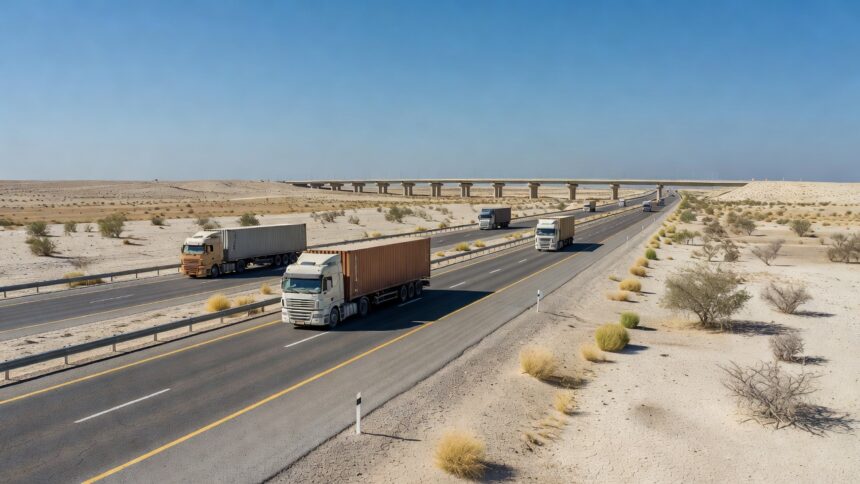
Gulf Digital News reported on January 30 2026 that Bahrain’s Shura Council placed debate on the decree law atop its agenda. The measure approves the Unified System for International Land Transport Among GCC Countries and brings Bahrain’s domestic rules into line with the regional regime. Officials indicated the harmonised standards would cover licensing along with operational and compliance requirements for cross border road movements. The step marks progress toward reducing regulatory differences that have complicated trade among the six member states.
Bahrain Decree Law 35 of 2025 seeks to embed the GCC framework into national legislation according to the text of the decree. The unified law regulates transport of both freight and passengers on roads linking the Gulf countries. It establishes common rules that participating authorities must apply at border crossings and along approved routes. Such alignment has formed a core element of GCC economic integration efforts for more than two decades.
The GCC Supreme Council adopted the unified land transport system during its 43rd session held in December 2022 the GCC Secretariat stated. That decision followed earlier standardisation work that produced uniform road specifications a shared glossary of traffic terms and common safety requirements across the bloc. Bahrain’s decree issued by royal assent on August 19 2025 translates the regional text into enforceable local law once parliamentary review concludes. The Shura Council discussion forms the latest stage in that ratification sequence.
According to the decree law the framework aims to facilitate smoother trade flows while raising road safety levels throughout the GCC. It also seeks to strengthen coordination among national transport regulators and eliminate unnecessary duplication at borders. A GCC Secretariat assessment found that the system would ease mobility and protect the interests of domestic transport operators in each member state. These goals respond to growing intra regional commerce that has intensified since the pandemic eased.
Mordor Intelligence data places the GCC freight and logistics market at 83.24 billion dollars in 2025 with expansion projected to 120.21 billion dollars by 2031 at a compound annual growth rate of 6.12 percent. Road transport accounted for 39.05 percent of freight revenue within that sector last year the consultancy reported reflecting the dense highway network that links production and consumption centres. The unified law is expected to support further growth by lowering administrative hurdles that currently slow cross border trucking. Such efficiencies could prove especially valuable for perishable goods and time sensitive shipments.
The GCC railway network spanning 2 117 kilometres will complement the road framework once completed according to GCC Secretariat projections. That rail system is forecast to carry 95 million tonnes of goods annually by 2045 as part of broader infrastructure investments that include new causeways and digital clearance systems. Bahrain’s second causeway link to Saudi Arabia will integrate both road freight and rail corridors the World Economic Forum noted in a February 2026 review of regional connectivity. These interlocking projects form a comprehensive strategy to position the GCC as a unified logistics corridor.
Implementation of the unified land transport rules will require updates to licensing procedures and enforcement mechanisms in Bahrain the decree law indicated. Authorities have signalled that training for inspectors and alignment of digital systems will follow parliamentary approval. The Shura Council debate on January 30 2026 therefore carries implications for both immediate regulatory adjustments and longer term trade performance across the Gulf.