

 ع
ع


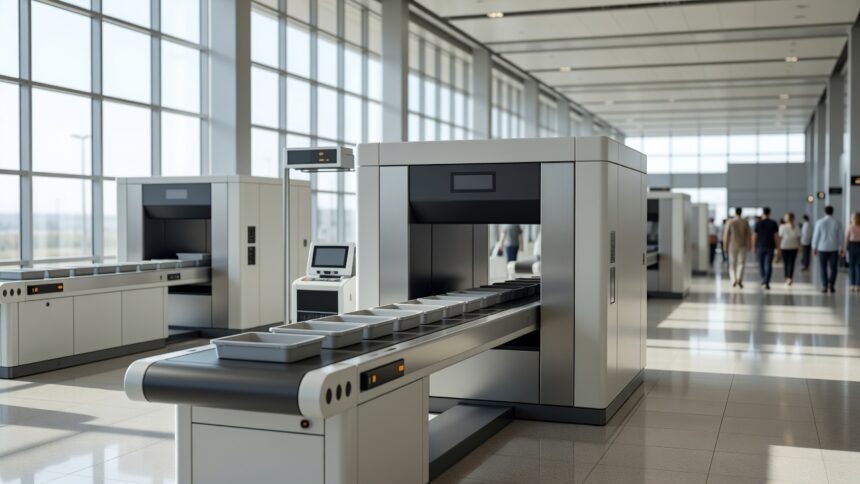
Bahrain International Airport has reduced screening times at security checkpoints by implementing computed tomography scanners that allow passengers to keep electronics and liquids inside carry-on bags. The technology forms a central element of the airport’s broader efficiency drive following completion of its $1.1 billion modernisation programme. Bahrain Airport Company data shows the upgraded terminal can now accommodate up to 14 million passengers per year, quadruple the capacity of the previous facility.
Automation systems have been introduced to support baggage handling, resource management and passenger flow, cutting reliance on manual processes. These tools enable real-time adjustments during peak periods and help maintain consistent operational tempos. According to a report from International Airport Review, such integration has proven essential for sustaining growth in a competitive regional aviation market.
Regulatory alignment with standards set by the International Civil Aviation Organisation and European Civil Aviation Conference has cleared the way for deployment of the new screening equipment. Bahrain’s Civil Aviation Affairs worked with GCC partners to verify compliance before operational rollout. The coordinated approach ensures both security integrity and seamless cross-border connectivity, a priority highlighted in multiple Gulf aviation reviews.
Industry assessments place throughput for certified CT cabin baggage systems at 850 to 900 trays per hour under typical configurations. Bahrain International Airport’s adoption of this technology has contributed to lower passenger wait times and fewer secondary inspections. A sector analysis published by Future Airport noted that the airport’s connected IT platform, comprising 25 integrated subsystems, underpins these performance gains.
The airport serves as a key Middle East hub for more than 26 airlines and has seen passenger numbers recover strongly after the COVID-19 pandemic. Partnerships with technology suppliers have supplied the hardware and software required for the upgrades, with ongoing support contracts ensuring system reliability. Officials have emphasised that the combined measures align with national Vision 2030 objectives for transport infrastructure.
As detailed in the article “Delivering throughput through CT, automation and regulatory alignment at Bahrain International Airport – International Airport Review”, the airport continues to refine its processes to meet rising demand while upholding the highest safety benchmarks. Further enhancements, including biometric elements already in use, are expected to deliver additional capacity gains in the years ahead. Bahrain Airport Company figures indicate the modernisation programme has already delivered measurable improvements in both efficiency and traveler satisfaction.