ع



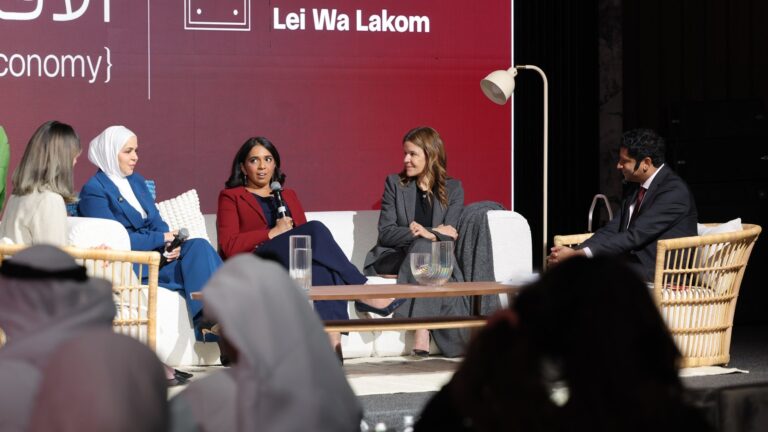
The Abu Dhabi Agriculture and Food Safety Authority presented its new strategy at the Global Food Security Summit in Abu Dhabi on October 6, 2026, under the patronage of Sheikh Mansour bin Zayed Al Nahyan. ADAFSA officials built the framework around five pillars and 13 programmes that seek to transform local food production while addressing resource constraints in the emirate. The presentation highlighted how the plan draws from the legacy of the late Sheikh Zayed bin Sultan Al Nahyan and incorporates advanced technologies to build a more productive agricultural system. Sheikh Hamdan bin Mohamed bin Zayed Al Nahyan attended the summit opening and stressed the role of public-private partnerships in advancing these goals.
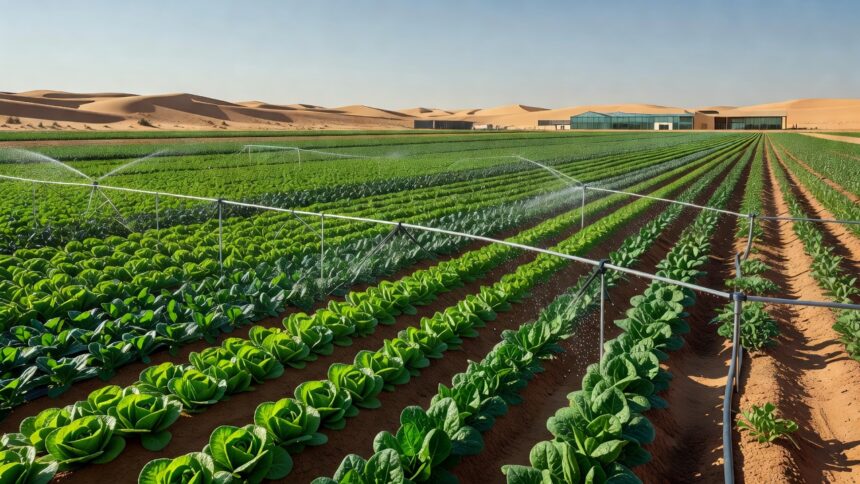
The strategy’s first pillar focuses on expanding production to strengthen Abu Dhabi’s capacity to meet its own food needs, according to the authority’s briefing at the event. A second pillar targets greater efficiency by deriving more value from reduced resources, with a target to lower irrigation water consumption from 24,700 cubic metres per hectare per year to 12,700 cubic metres per hectare by 2040. ADAFSA data presented at the summit showed these steps would support sustainable growth in an arid environment where water scarcity remains a core challenge. Officials noted that the approach aligns with national priorities for long-term resource management.
Resilience and supply security form the third pillar, which sets an ambition for the UAE to climb from 26th place in the Global Food Security Index to the global top five by 2040, ADAFSA officials stated during the summit. The authority emphasised that the food chain extends beyond farms to encompass processing, distribution and storage systems that require reinforcement against external shocks. A fourth pillar centres on technology and innovation to drive productivity gains across the sector. The strategy projects that these advances will increase the agricultural sector’s contribution to Abu Dhabi’s economy from AED 9.5 billion to AED 34.6 billion by 2040.
Financial enablers constitute the fifth pillar, providing mechanisms to support investment and growth in food production and related industries, according to the ADAFSA framework unveiled on October 6, 2026. The authority reported that Abu Dhabi’s food production reached AED 13.3 billion in 2023, accounting for 36 percent of the UAE’s total food manufacturing output. This base of more than 25,000 farms and 23,000 livestock holdings supplies raw materials for local processing, the authority’s data showed. The new programmes aim to link farms directly to factories to improve economic returns and food security.
The initiative builds on the Abu Dhabi Investment Office’s earlier call for Dh128 billion in food sector investments by 2045 to position the emirate as a net exporter, according to ADIO statements from 2024. That effort included subsidies for companies in livestock, fish farming, alternative proteins and seaweed production, along with preliminary agreements with firms such as Switzerland’s NUOS and Israel’s Believer Meats. A CBRE report on the UAE food sector noted separate national targets to triple domestic food production by 2030 through vertical farming and improved traditional methods. These overlapping strategies reflect sustained focus on reducing reliance on imports that currently meet 80 to 85 percent of UAE food needs.
ADAFSA Director General Saeed Al Ameri outlined the vision in remarks at the summit, according to coverage by Gulf News and the Abu Dhabi Media Office. “We draw our vision from the legacy established by the late Sheikh Zayed bin Sultan Al Nahyan, who believed in the ability of this land to give,” Al Ameri said. “Today, we continue to build on that vision by harnessing modern technologies and innovation to develop a more productive, sustainable and resilient food system.” He added that the authority seeks to raise self-sufficiency in basic food commodities to 70 percent by 2040 while improving natural resource efficiency and reducing irrigation water consumption.