
 ع
ع


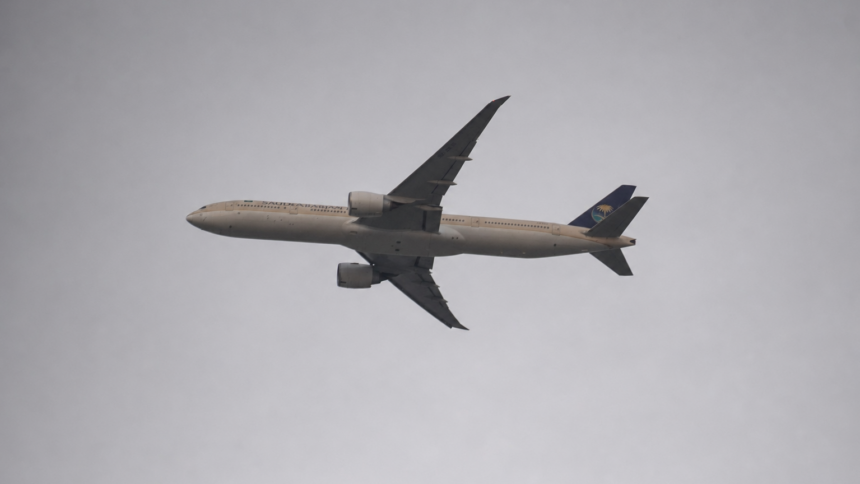
The European Union Aviation Safety Agency released its Conflict Zone Information Bulletin CZIB-2026-09 on Sept. 30, directing operators subject to EU regulations to refrain from flying at any altitude or flight level within a defined portion of the Jeddah FIR. The restricted sector lies along the boundary of the Jeddah Flight Information Region and is delineated by the navigation points RIBOK, BOSUT, ISLAM, DEKLO, OBSAM and SILPA. EASA’s bulletin remains in force until Nov. 16 unless reviewed sooner, according to the agency’s published assessment.
Operators must exercise caution throughout the remainder of the Jeddah FIR while maintaining an up-to-date risk assessment and high-level contingency plans that account for possible short-notice instructions from Saudi authorities. The bulletin referenced aeronautical information from Saudi Arabia, neighbouring states and the operators’ own regulatory bodies. EASA stated it would continue monitoring developments to determine whether risks to EU carriers increase or decrease.
The agency highlighted several specific threats arising from intensified military activity, including the potential misidentification of civilian aircraft, missile and drone overflights, interception operations and falling debris. These risks have grown following a marked rise in Houthi attacks during September that expanded in frequency and geographic scope. Targets have included Saudi maritime, energy and infrastructure sites extending to the Red Sea and Gulf of Aden, an EASA assessment found.
Attacks in recent weeks have reached deeper into Saudi territory, encompassing areas around Riyadh, Tabuk and Yanbu, according to the bulletin. The Houthis’ demonstrated reach has heightened concerns over civil aviation even in zones previously considered less exposed. EASA linked the overall volatility to the ongoing military conflict between the United States and Iran, which has produced significant kinetic activity across Saudi airspace.
Several other aviation authorities have issued comparable notices for the Jeddah FIR, including France and Italy, whose restrictions overlap in timing with the EASA measure. Data compiled by safeairspace.net records repeated Houthi drone and missile strikes on southwestern Saudi airports between 2020 and 2022, along with a missile intercept observed near Jeddah in late 2024. The current advisory forms part of a wider set of EASA bulletins that extend avoidance recommendations for airspace over Lebanon, Iran, Iraq and Gulf waters of multiple neighbouring states until mid-November.
Saudi authorities have separately warned that emergency air traffic procedures could activate on short notice across the affected region. EASA’s bulletin emphasised that operators should consult the latest aeronautical publications before planning any flights through the Jeddah FIR. The agency framed its recommendations as a response to the fluid security environment rather than a permanent prohibition on Saudi overflights.