
 ع
ع


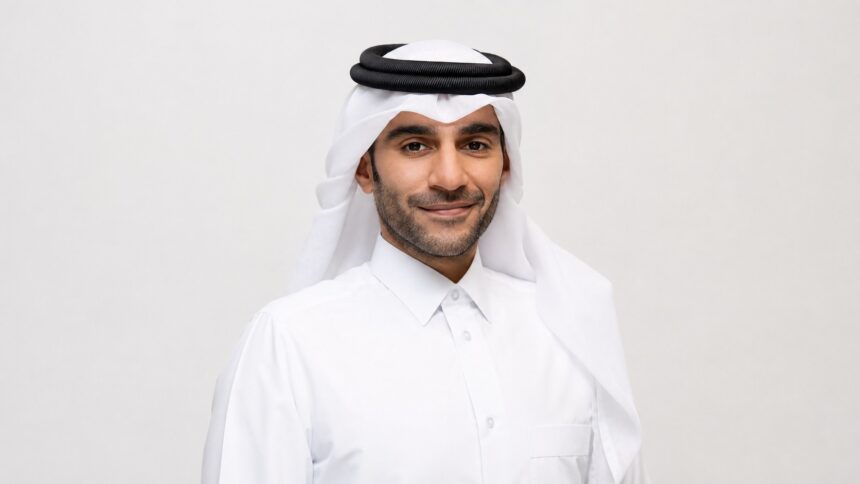
A Cabinet-approved tokenisation framework is moving toward a QR26.6 billion residential sales market. Ahmad Al-Khanji’s path from proptech founder to Qatar Financial Centre communications head sits directly at the seam between property, technology and capital.
Qatar’s latest real estate reform is not principally about blockchain. It is about what constitutes ownership.
On 27 August, the Cabinet approved a draft law and executive regulations for real estate tokenisation and trading. The framework, prepared across the justice, municipality and financial regulators, will define the nature of a property token and the rights of its holder. More importantly, according to the Ministry of Justice’s statement on the draft, the tokenisation system is to be linked directly to Qatar’s real estate registration system.
That detail moves the proposal beyond a fintech experiment. A digital unit becomes commercially useful only when an investor can establish what legal claim sits underneath it, who records that claim, and what happens when it is transferred. Qatar is proposing to build that connection at registry level.
A QR26.6 billion market meets a smaller ticket
The market being opened to that experiment is already liquid by recent Qatari standards. Knight Frank’s review of 2025 puts residential sales at QR26.6 billion, up 43.5 percent year on year, across 6,831 transactions, a 50 percent increase. Yet the same data put average apartment prices at QR12,865 per square metre. At that national average, 100 square metres implies nearly QR1.29 million before transaction costs.
Tokenisation changes the unit of participation rather than the underlying building. Instead of financing an entire apartment or jointly structuring ownership with a handful of partners, investors could potentially acquire smaller regulated interests and spread capital across several properties. Developers and owners, in turn, could gain another channel for raising money against real assets.
The significance is therefore less “crypto property” than capital formation. Qatar can potentially take an asset class still sold mostly in whole units and introduce a regulated layer between direct ownership and conventional pooled investment.
Qatar is not starting from zero
The legal plumbing for digital assets is already partly in place. The Qatar Financial Centre Digital Assets Framework, effective since September 2024, established rules around tokenisation, legal recognition of rights in tokens and underlying assets, custody, transfer, exchange and smart contracts.
That is where Ahmad Al-Khanji becomes useful evidence rather than the subject of the story. Al-Khanji, now Head of Communications at QFC, previously co-founded and exited the Qatari property platform Hapondo. His professional path has moved through the two markets the new legislation now has to join: the practical information layer of real estate and the institutional architecture of finance.
In a LinkedIn post published on 27 August 2026 after the Cabinet decision, he identified the registry connection as the decisive feature: “Linking the system to Qatar’s Real Estate Registry could support ownership verification, investor protection and market integrity.”
It is a communications line, but also a good description of the legal test. The product is not the token. The product is confidence that the token maps cleanly onto an enforceable right.
The Gulf has already run the access test
Dubai provides the nearest comparison. Its first tokenised property project sold out within a day in May 2025, attracting 224 investors from 44 nationalities. Seventy percent were entering Dubai real estate for the first time, with an average investment of AED10,714, according to the Dubai Land Department.
That is the demand argument for fractional property in one statistic: 70 percent new entrants.
But Dubai’s subsequent regulatory work shows where the harder questions begin. In February 2026, the Virtual Assets Regulatory Authority said the initiative had moved into controlled Phase 2 testing, with secondary-market mechanisms still among the functions being evaluated. Issuing small digital interests can widen access quickly. Building a regulated market in which those interests can later change hands is a different exercise.
The law is not the market yet
There is one limit that matters now. Qatar has approved a draft, not launched an investment product. The published material does not yet establish final token sizes, eligible assets and investors, platform permissions, secondary-trading mechanics or the detailed treatment of token holders under the wider property regime. The draft was sent to the Sharek platform for ten days of public feedback before legislative review. Until those rules are final, the investable market remains prospective.
That restraint is precisely why the registry provision matters so much. If the final law gives token holders clear rights, keeps the official property record authoritative and creates an orderly route for issuance and transfer, Qatar will not merely have digitised a deed. It will have changed the denominator of property investment, from the price of a unit to the price of a regulated interest in one. In a market that sold QR26.6 billion of homes last year, that could bring a new class of capital to an old asset without asking investors to confuse innovation with ownership.