

 ع
ع


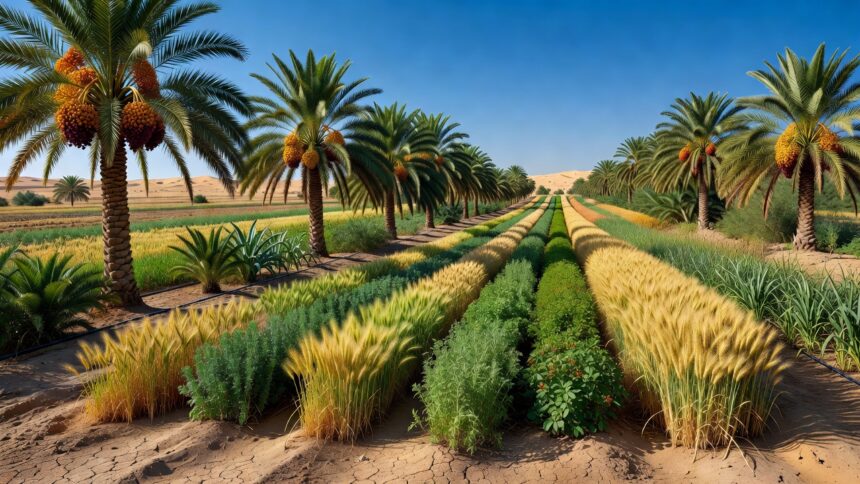
Bahrain’s Shura Council approved the legislation that endorses the GCC Unified Law on Plant Genetic Resources for Food and Agriculture, Gulf Digital News reported on February 16, 2026. The bill, attached to Royal Decree No. 65 of 2025, formally adopts the regional system for the protection and exchange of these resources. A subsequent report from News of Bahrain confirmed that the measure establishes clearer regulatory controls over their use in food and agriculture. The Shura Council had debated related food security and research priorities only days earlier, according to a Gulf Digital News article published on February 13, 2026.
The unified law prohibits any activities involving plant genetic resources for food and agriculture without a license, a database entry on Qanoniah showed. It sets out rules for monitoring, exploration, conservation and sustainable utilization of such resources. The framework also facilitates information and technology exchange among GCC states while safeguarding associated traditional knowledge, the legal text indicated.
GCC agricultural cooperation committees advanced the unified law as early as their 32nd meeting in June 2022, the GCC Secretariat documented at the time. The system forms part of wider regional efforts to harmonize standards across member states. Bahrain’s endorsement aligns with similar steps taken by other GCC countries to implement the common legislation.
Bahrain officially acceded to the International Treaty on Plant Genetic Resources for Food and Agriculture in July 2024, the Food and Agriculture Organization reported. This accession integrated the kingdom into the global multilateral system for access and benefit-sharing of key genetic materials. The treaty supports crop improvement programs essential for adapting to environmental pressures in arid climates.
A Mordor Intelligence sector outlook estimated Bahrain’s agriculture market size at USD 644.79 million in 2026, up from USD 634.20 million the year before. The assessment highlighted 96 percent self-sufficiency in dates and 90 percent in fish production as notable benchmarks. Bahrain’s National Food Security Strategy 2020-2030, developed with FAO cooperation, emphasizes local production technologies, supply-chain diversification and strategic reserves to address these priorities.
Law 13 of 2026, which ratifies the unified legislation, received final approval in March 2026, The Law Reporters noted in its coverage. The measure requires implementing regulations to detail licensing procedures and compliance standards. Authorities expect the framework to support ongoing conservation programs that maintain genetic diversity for future agricultural resilience across the GCC.