ع



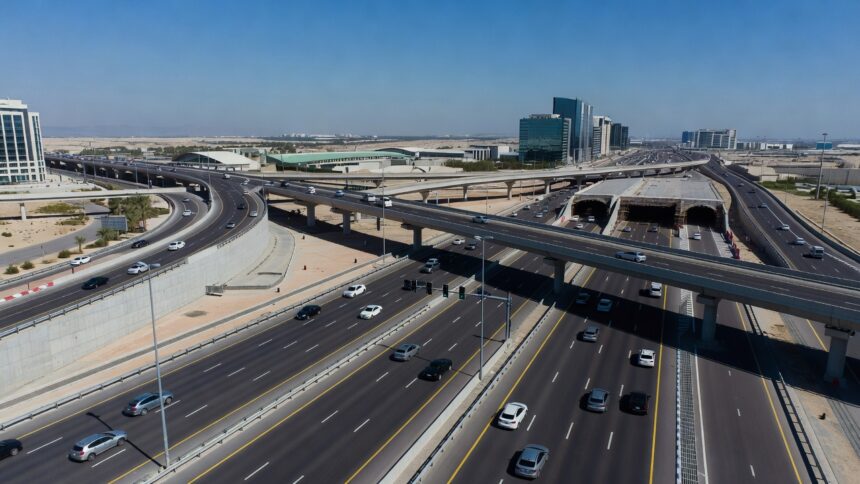
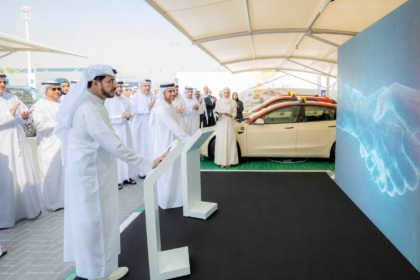
His Highness Sheikh Dr Sultan bin Mohammed Al Qasimi, Supreme Council Member and Ruler of Sharjah, inaugurated the first phase of the road connectivity project with Dubai on November 4, according to the Emirates News Agency. The opening included the partial activation of Al Taawun Interchange along with several bridges and junctions that now carry one-way traffic from Sheikh Mohamed bin Zayed Road toward Expo Centre Sharjah. Officials timed the step to coincide with the Sharjah International Book Fair, ensuring easier access for the thousands of daily visitors expected at the venue. The move forms the first deliverable in a larger programme designed to expand capacity on routes that carry heavy commuter volumes between the two emirates.
The Initiatives Implementation Authority known as Mubadara reported that the first phase also covers preparatory work for a 560-metre tunnel with three lanes in each direction along Al Taawun Street. This section separates through traffic from local movements and includes a signal-controlled junction above the tunnel. Dr Salah bin Butti Al Muhairi, chairman of Mubadara, stated that the partial opening already delivers measurable relief on key approaches to the Expo site. The authority added that construction of the first phase required 126 days and more than 2.7 million working hours.
Mubadara outlined that the second phase will complete the upper-level junction at Al Taawun Roundabout and fully open the Al Taawun Tunnel. That stage will also finish bridges and junctions along the three industrial streets and develop the Al Khulafa Al Rashideen Interchange together with its 315-metre bridge to Jamal Abdul Nasser Street. Yousef Khamis Al Othmani, chairman of the Sharjah Roads and Transport Authority, told WAM the entire sequence reflects the Ruler’s vision of placing residents’ quality of life at the centre of infrastructure planning. Completion of all phases is scheduled for February 2027.
Project data released by the Sharjah Roads and Transport Authority place the full scheme at 9.18 kilometres of new road with a paved area exceeding 207,000 square metres. The initiative incorporates 753 metres of bridges, 581 metres of tunnels and a 19-kilometre stormwater drainage network installed in coordination with utility providers. Once finished the corridors will add capacity for up to 5,200 vehicles per hour on the Third Industrial Street axis and as much as 4,200 vehicles per hour through the Al Taawun Tunnel during peak periods. The authority’s assessment found that full operation should cut congestion on affected routes by up to 85 percent.
The National reported in September 2026 that Dubai had approved an 80-kilometre, 12-lane corridor linking Abu Dhabi and Sharjah with a first-phase budget of Dh3.5 billion. That parallel scheme includes 72 bridges and 17 tunnels and is projected to reduce journey times by 60 percent on its initial 30-kilometre segment. Such coordinated investments across the northern emirates respond to sustained growth in cross-border traffic that has strained existing networks since the post-pandemic economic rebound. The Sharjah project complements these wider regional efforts by focusing on direct links between residential, commercial and industrial zones in the two neighbouring emirates.
Al Muhairi told WAM the current phase already demonstrates the speed at which targeted infrastructure can be delivered when priorities align. The Sharjah Roads and Transport Authority confirmed that the completed elements have begun operating under live traffic conditions without reported disruptions. Data from the authority show the new alignments will distribute flows more evenly across the expanded network once the remaining sections open next year.