ع



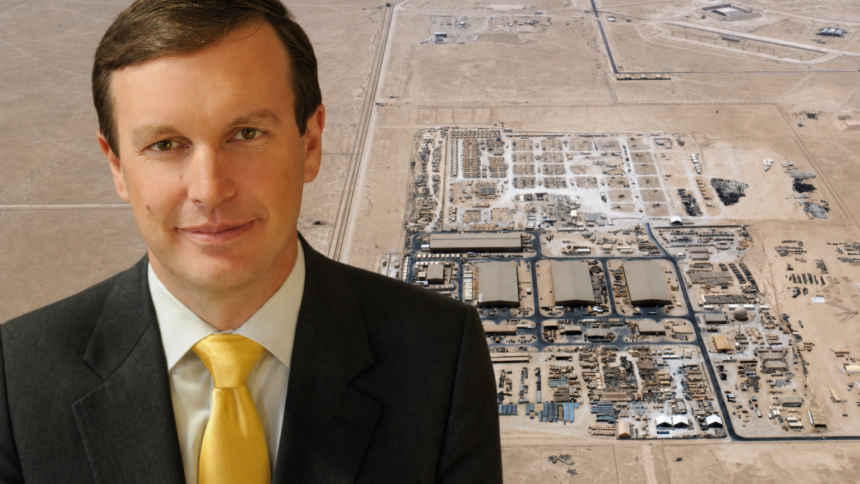
Connecticut Senator Chris Murphy said he plans to introduce legislative language protecting lawmakers’ ability to inspect overseas US military installations after the Pentagon rejected his request to visit Al Udeid Air Base. The senior Democrat on the Senate Foreign Relations Committee accused the Defense Department of obstructing congressional oversight into the conflict with Iran that began in February. Murphy argued that members of Congress who authorize operations and approve defense budgets require direct access to facilities and commanders to evaluate the consequences of armed engagements, according to his statements upon returning from the Gulf.
The senator had submitted a formal letter and appealed directly to US Central Command for permission to tour the base, which serves as the largest American installation in the Middle East and the forward headquarters for Central Command operations. Murphy also sought a briefing from military leaders on the regional effects of the war but received neither during his travels to Qatar and Saudi Arabia, where he held discussions with senior Gulf officials including the Qatari emir and the Saudi crown prince. A Daijiworld Media Network dispatch from Washington detailed how the denials came despite Murphy’s position on committees overseeing foreign policy and military spending.
Pentagon officials stated that Murphy’s office received prior notification of the restrictions, which stem from a March 3 directive by Defense Secretary Pete Hegseth imposing travel limits across the region that apply uniformly to all lawmakers regardless of party. The department emphasized that the senator was not singled out and that the guidance has been enforced evenly. Murphy countered that the episode formed part of what he described as an active effort to shield the war’s costs and implications from Congress and the American public, as he outlined in remarks to journalists in Riyadh.
Murphy indicated he would embed the access protections into future defense authorization and appropriations measures under consideration in Congress. He acknowledged that any such provision was unlikely to advance before the end of 2026 but expressed confidence it would shape debates when those bills reach the floor in 2027. The senator, who has visited active conflict zones including Afghanistan and Iraq in the past without similar obstacles, framed the legislation as essential to restoring congressional prerogatives.
Al Udeid Air Base has endured repeated Iranian attacks including drone strikes since the onset of hostilities, sustaining damage that has raised questions about operational resilience in the theater. Reuters reporting from the region noted that the facility hosts thousands of US personnel and coordinates air operations across multiple commands, making it central to American strategy in the Gulf. Multiple lawmakers from both parties have pressed the administration for fuller disclosures on war expenditures, troop impacts and long-term planning amid the seven-month-old conflict.
The senator’s trip represented the first by a Democratic member of the upper chamber to the area since fighting erupted, according to accounts from his office. Murphy contrasted the Pentagon’s position with assistance from Secretary of State Marco Rubio, who helped arrange the high-level diplomatic sessions that formed the core of the delegation’s schedule. He called on Republican colleagues to support measures that would prevent future restrictions on oversight travel.
Murphy’s planned legislative push underscores ongoing friction between branches of government over access to information on military campaigns conducted without fresh congressional approval. The senator reiterated that his requests followed standard procedures used on prior CODELs without incident until this episode. Defense Department correspondence had confirmed the travel curbs well in advance of his departure from Washington.