
 ع
ع


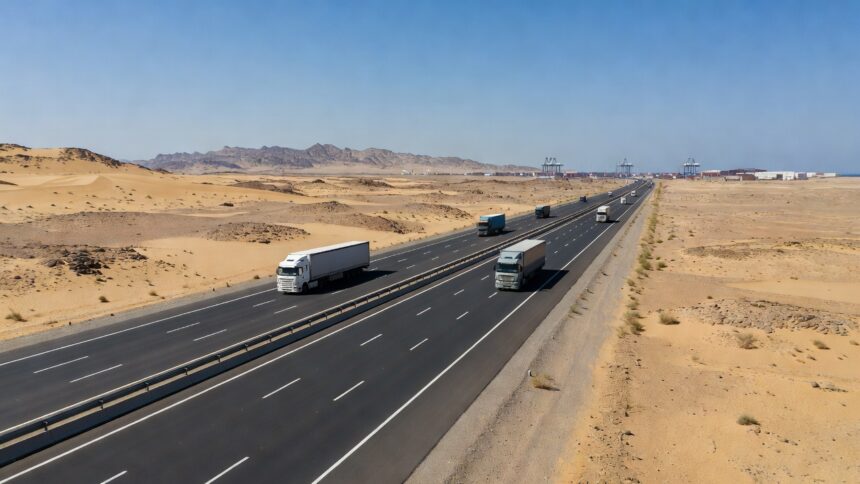
The Council of Oman conducted the review during a dedicated joint session on legislative reforms, according to Arabian Stories. Participants examined provisions intended to regulate international land transport operations among the six GCC countries. The draft law, which the GCC Supreme Council adopted in its 43rd session in December 2022 per the GCC Secretariat, establishes common rules for vehicles and operators crossing borders. Officials emphasised its role in raising overall road safety standards throughout the region.
The proposed system supports the creation of unified public policies for land transport, Arabian Stories stated. It targets enhancements in logistics efficiency and the reduction of accidents on shared road networks. Integration with Oman Vision 2040 forms a central element of the discussions, as the strategy calls for the logistics sector to contribute 14 percent to national GDP by 2040 according to an Oxford Business Group analysis. The plan additionally aims to generate 300,000 jobs in logistics services by the same target year.
Road safety receives particular attention under the unified framework, with earlier GCC initiatives having produced standard specifications for road construction and a unified glossary of terms, the GCC Secretariat indicated. A common guide for traffic control devices and safety requirements for road transport has also been adopted across member states. These measures complement the new law by providing consistent technical foundations for infrastructure development. The overall approach seeks to minimise discrepancies that could impede seamless regional travel.
The review aligns with ongoing work on the GCC railway project, which official statements project for substantial completion by 2030 to link all member states by rail. Oman’s Ministry of Transport has affirmed participation in connecting these networks to boost trade volumes and passenger services across borders. Such infrastructure would operate alongside the land transport law to create integrated multimodal connectivity options. Harmonisation of regulations is viewed as essential for realising the full economic potential of these linked systems.
Non-oil sectors including transport have recorded rapid expansion under Oman Vision 2040, a World Bank assessment found. The Sultanate has invested in major ports at Duqm, Salalah and Sohar to establish itself as a global logistics node along international shipping lanes. These projects have begun to shift economic activity away from hydrocarbon dependence toward diversified trade and services. The unified GCC law is expected to ease the movement of goods through Omani facilities into neighbouring markets once fully implemented.